2025.11.18
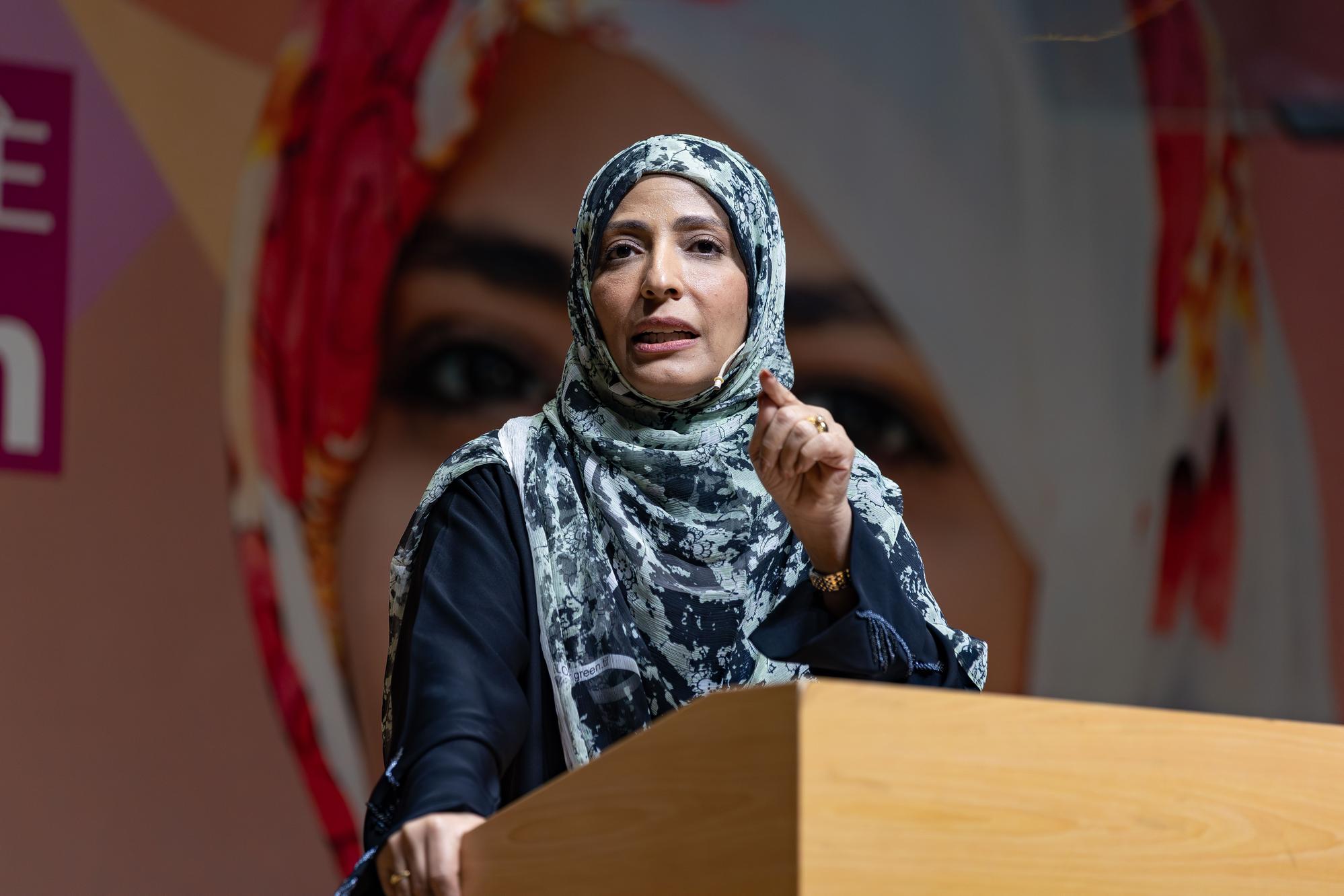
Nobel Peace Prize laureate Tawakkol Karman delivers the opening keynote of the “Nobel Laureates at NTHU” series.
National Tsing Hua University (NTHU) in Taiwan hosted the inaugural lecture of its “Nobel Laureates at NTHU” series on November 17, featuring 2011 Nobel Peace Prize laureate Tawakkol Karman. Speaking on “Sustainable Development and Our Shared Future,” she told the young audience, “Don't let others decide your future. The future must be written by your own hands.”
Karman stressed that lasting peace requires a foundation of human rights and justice. She urged young people not to remain bystanders but to take responsibility for the world through knowledge and action.
A Yemeni journalist and human rights activist, Karman became the first Arab woman to receive the Nobel Peace Prize in 2011. Known as the “Lady of the Arab Spring,” she founded Women Journalists Without Chains to promote press freedom and women's rights. She moreover worked to defend democracy and human rights through nonviolent action despite facing threats and arrest.
"Sustainable development cannot be limited to environmental protection or GDP growth," Karman argued. “It must ensure that people live with dignity, security and equal opportunity. Combating poverty, empowering women and supporting education and healthcare are all essential for stability and peace.”
Karman also emphasized that women's rights are not just a “gender issue” but an integral part of human rights and democracy. “Women must become equal partners, not victims of violence and discrimination,” she said, encouraging women and young people to participate more in public affairs, remain sensitive to injustice and build change through their everyday choices and actions.
Turning to Taiwan, Karman praised its achievements in democracy and technology, noting its key role in regional security and global supply chains. “Taiwan's most precious asset,” she said, “is not only its technology and economy, but its free people.”
At the same time, she reminded Taiwan that industrial and technological development must go hand in hand with environmental protection. She described the transition to clean energy and the expansion of renewable energy as crucial to tackling global warming. She called on citizens to closely monitor climate policy and press the government to turn their commitments into concrete action.
Addressing emerging technologies, Karman noted that AI is one of the most powerful tools of our time. She warned that without ethical frameworks rooted in human rights, artificial intelligence can easily become a tool of oppression and a weapon in the hands of authoritarian regimes. She urged countries developing new technologies to prioritize human rights and freedom.
NTHU president W. John Kao (高為元) noted that Karman's journey reminds us that human rights are never guaranteed. “While the world focuses on AI and semiconductors,” he said, “we must not forget that without human rights protection, technological progress loses its meaning.”
President Kao shared a line from Karman's writings that particularly moved him: “Remember that you are strong and brave, and these qualities will help you overcome many difficulties.” He expressed hope that NTHU students would carry this strength into their own fields of endeavor to defend human rights and justice.
During her visit, Karman also joined a dialogue with NTHU faculty and students, sharing her journey in the struggle for equality and human rights, and discussing topics ranging from human rights, education and media responsibility to gender equality and her experiences during the Arab Spring.
Yu-Ting Chiang of the College of Technology Management asked how Karman maintains resilience amid arrests and threats. Karman replied that “hope and knowledge” sustain her and she encouraged the students to “see yourselves as part of the change and as part of the solution.”
Active in public affairs since high school, Chiang served on the Executive Yuan's Child and Youth Welfare and Rights Promotion Group and faced public pressure while pushing for legislative proposals. She said Karman's courage and resolve deeply inspired her and that the exchange helped her reflect on how she can continue to speak out in the public arena.
The “Nobel Laureates at NTHU” series is hosted by National Tsing Hua University in collaboration with the International Peace Foundation (IPF) as part of the TAIWAN BRIDGES program. Following Karman's visit, NTHU will host the 2012 Nobel laureates Alvin E. Roth (Economic Sciences) and Brian K. Kobilka (Chemistry) in April of 2026.
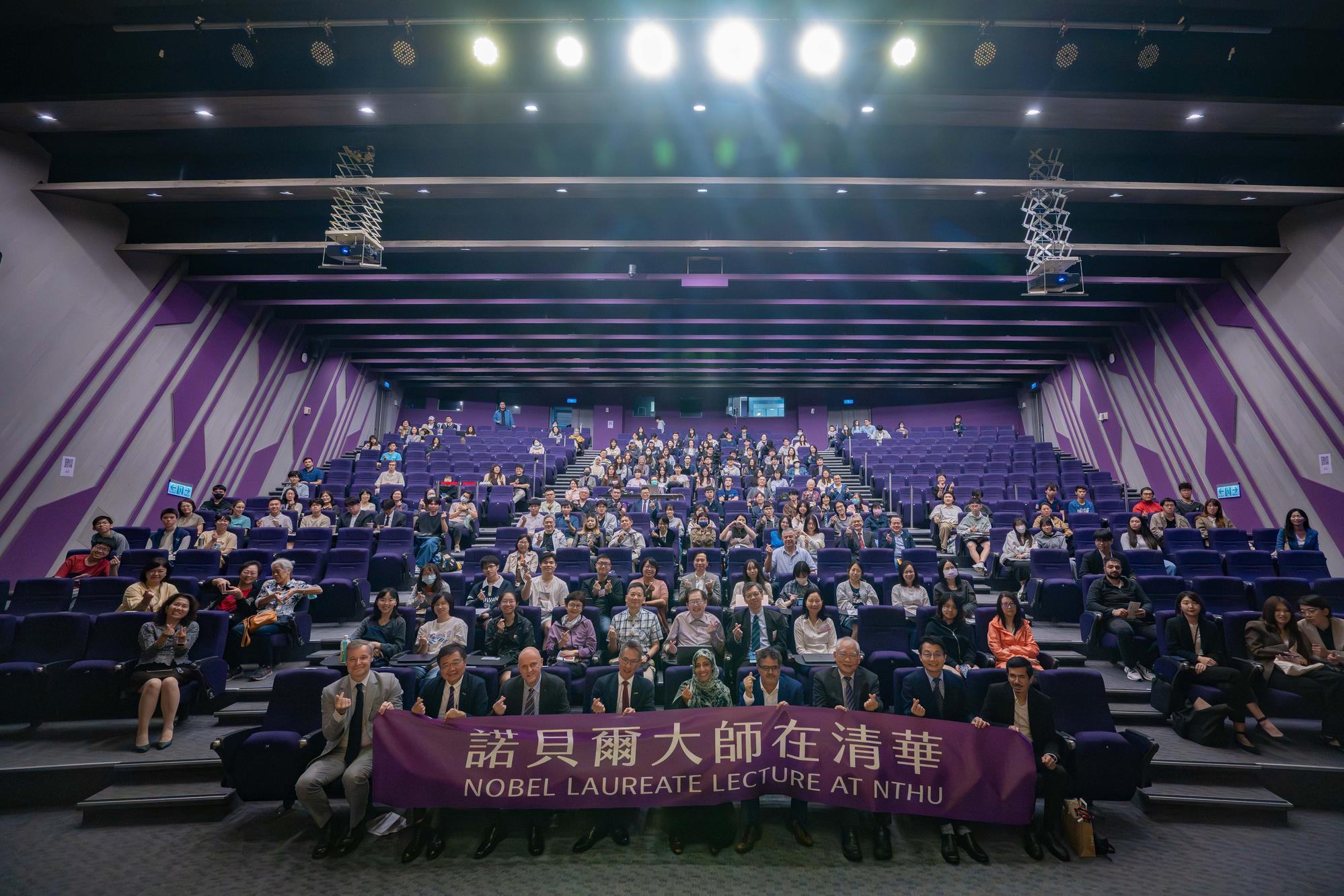
Nobel Peace Prize laureate Tawakkol Karman draws a capacity crowd of NTHU students, faculty, and members of the public.
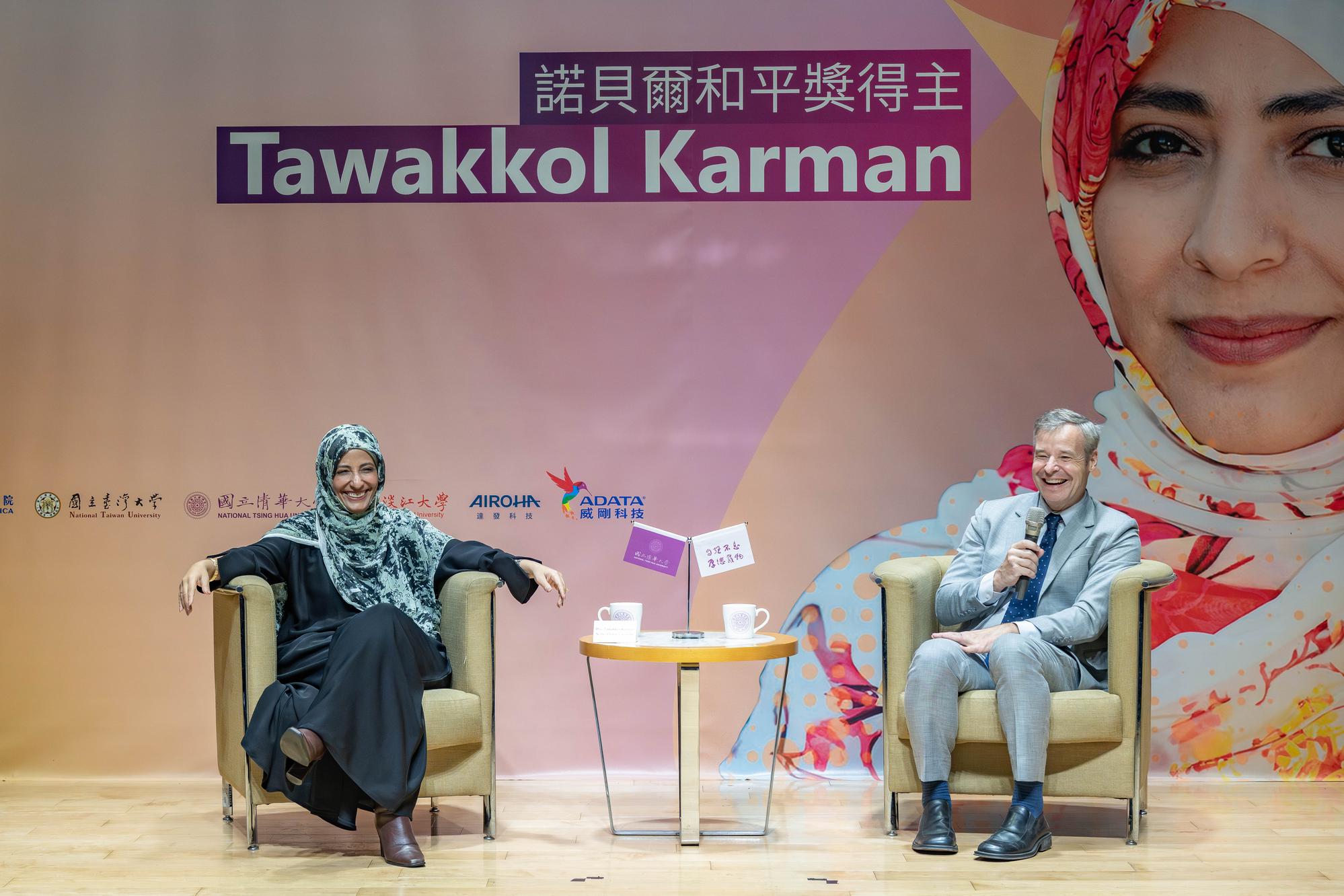
Tawakkol Karman (left) with moderator Professor Douglas Edward Skonicki (侯道儒), chair of the Department of Chinese Literature.
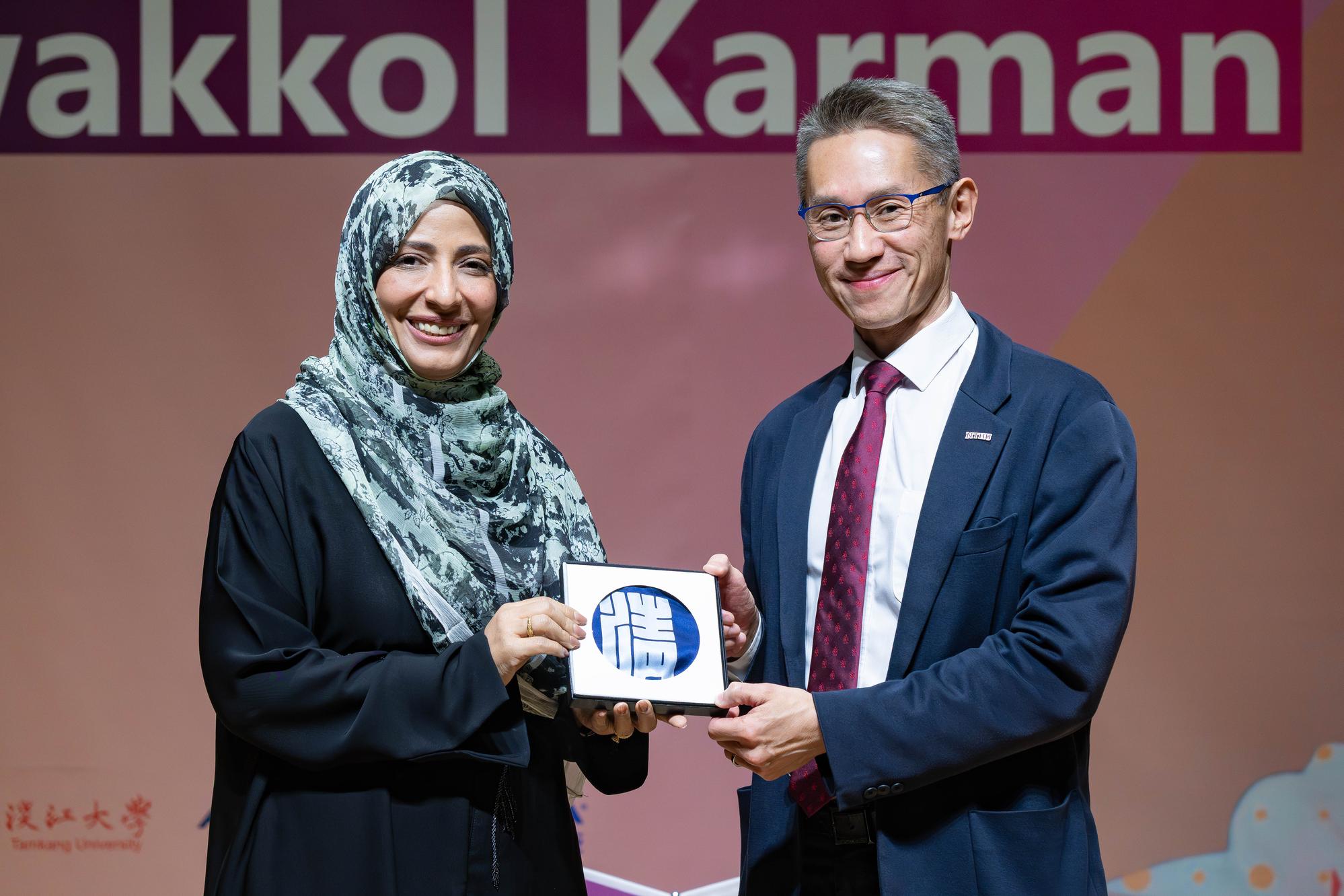
NTHU President W. John Kao (高為元, right) presents a commemorative gift to Nobel Peace Prize laureate Tawakkol Karman.
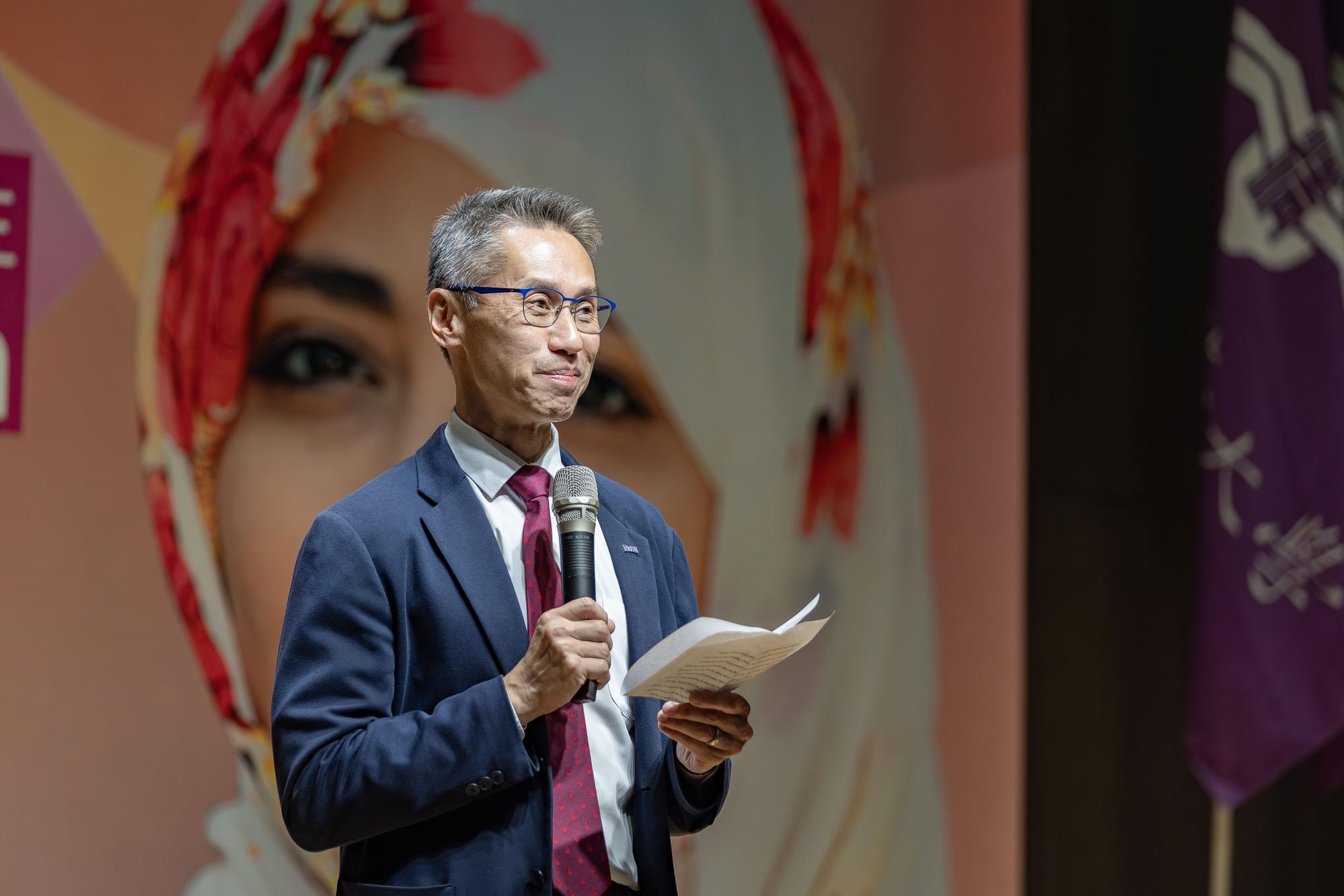
NTHU President W. John Kao delivers opening remarks for the series.
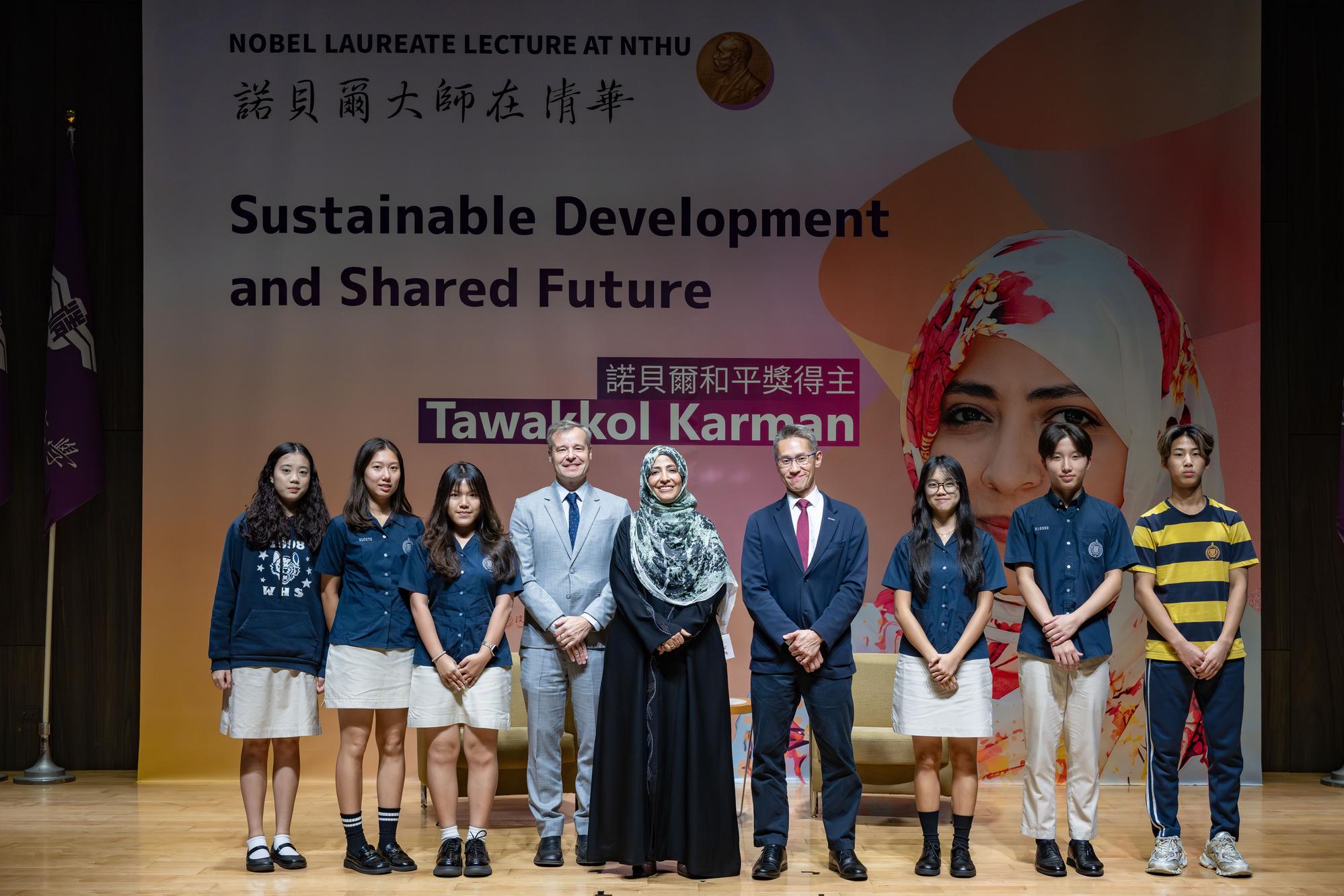
Students and teachers from Washington High School in Taichung travel to NTHU to attend Karman's lecture.
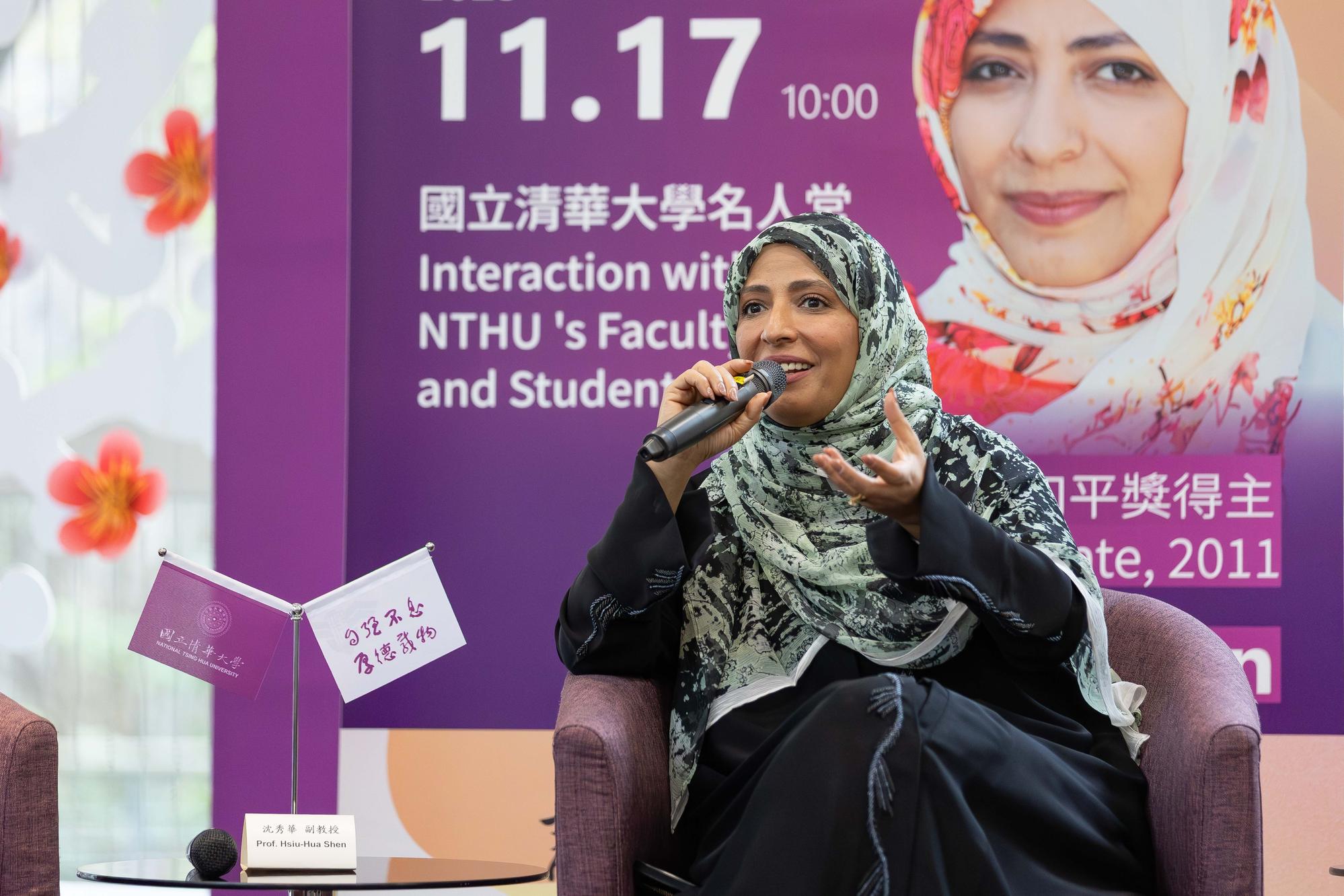
Tawakkol Karman engages in dialogue with NTHU faculty and students.
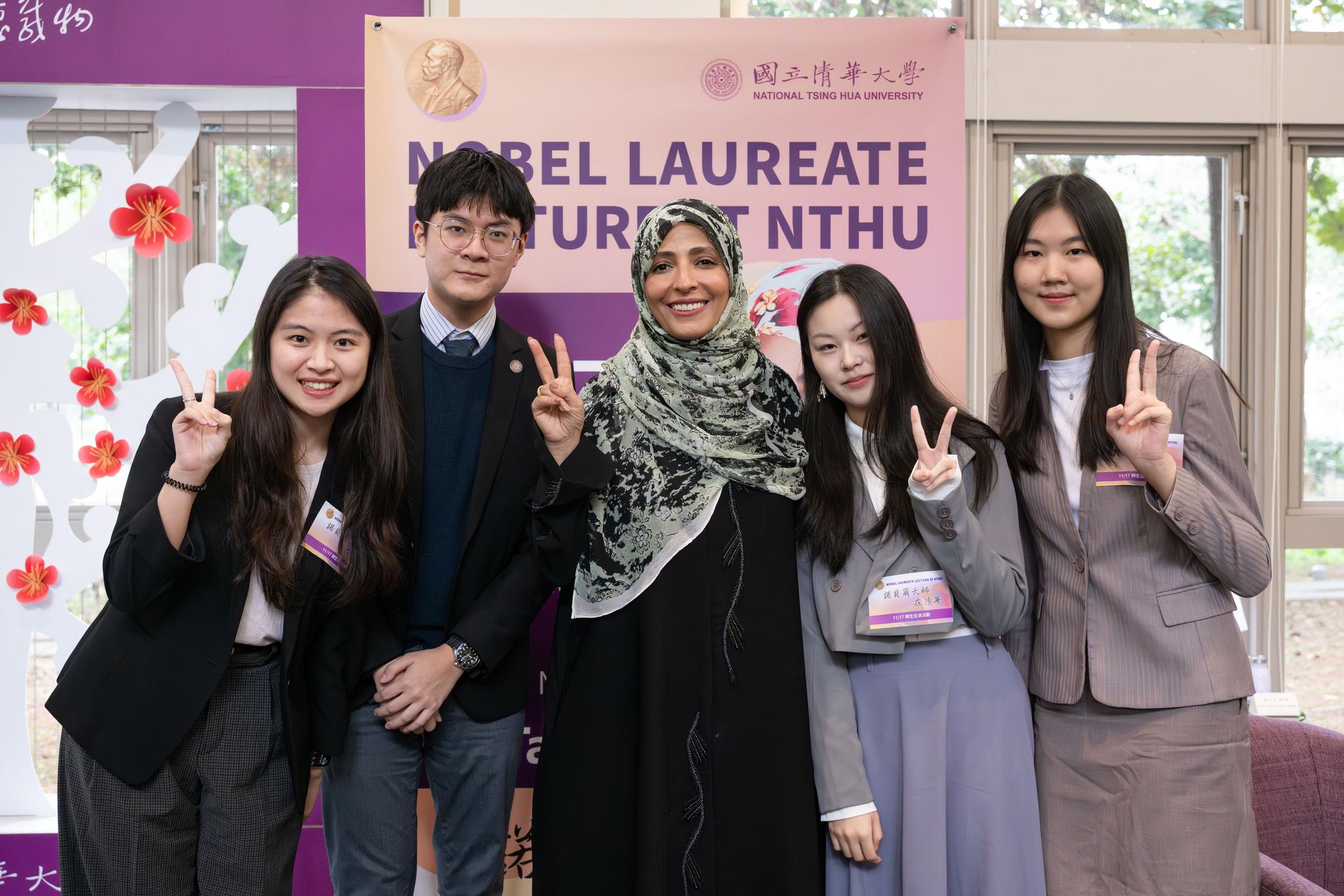
Tawakkol Karman (center) with NTHU students, including Yu-Ting Chiang (江瑜庭, far left), a third-year student in the College of Technology Management.
