2025.11.27
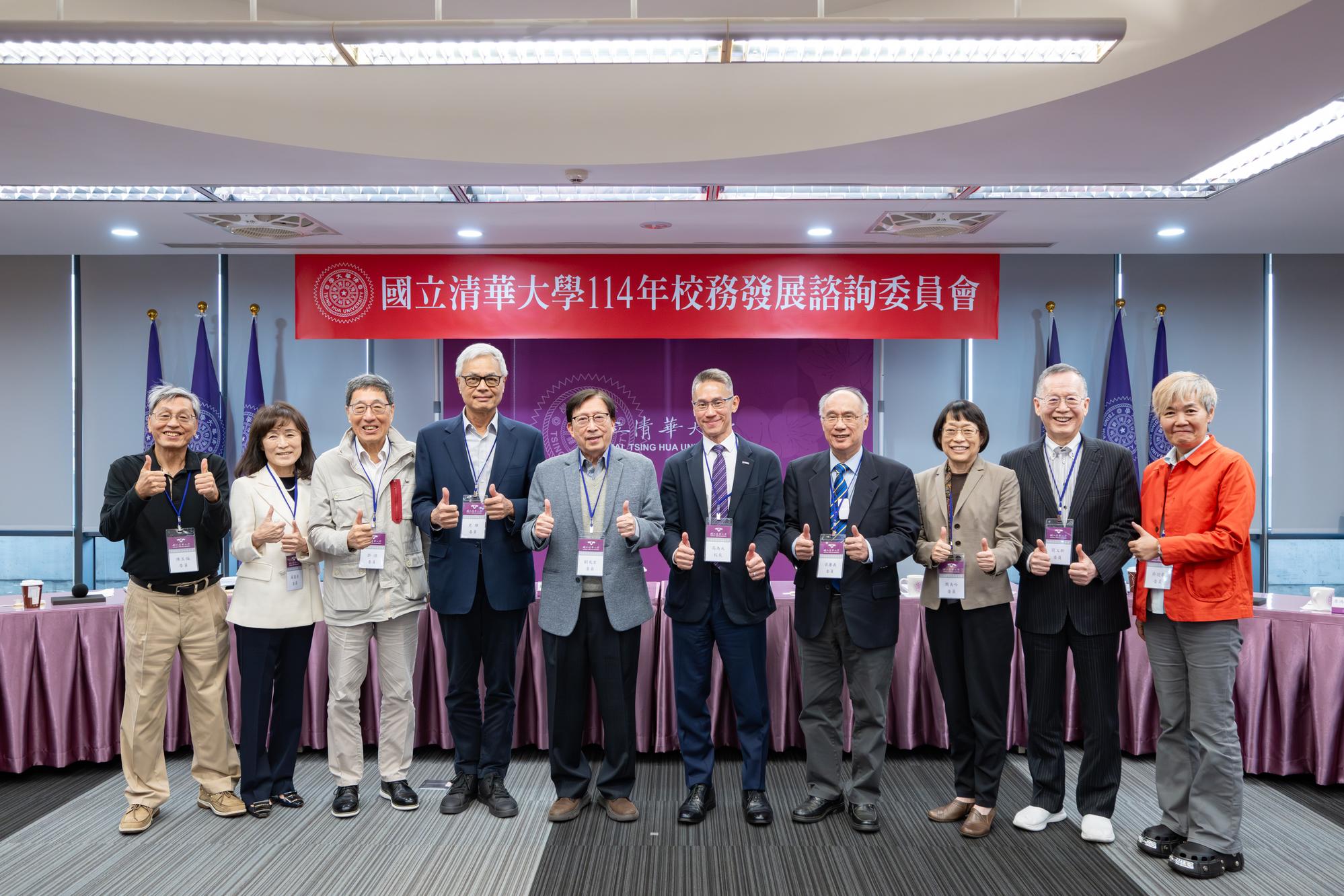
From left: Wu-Fu Chen, Huey-Jen Jenny Su, Way Kuo, Wei Shyy, Chao-Shiuan Liu, NTHU President W. John Kao, Kung-Yee Liang, Mei-Yin Chou, Eugene Chien and Ying-Chun Wu at the NTHU Development Advisory Committee meeting on Nov. 19.
On Nov. 19, National Tsing Hua University (NTHU) in Taiwan convened its Development Advisory Committee, focusing for the first time on NTHU's 10 flagship research areas. The meeting also reviewed plans for the Taoyuan, Kaohsiung and Chunghua campuses and the proposed Tsing Hua Science & Technology Park. Members commended NTHU's academic achievements and strong execution, while urging stronger governance and resource integration as multiple campuses and major initiatives advance in parallel.
Nine members attended, led by convener and former NTHU president Chao-Shiuan Liu (劉兆玄). The committee included Academia Sinica Vice President Mei-Yin Chou (周美吟) and Academia Sinica Academician Kung-Yee Liang (梁賡義); Prof. Way Kuo (郭位), former president of City University of Hong Kong, and Prof. Huey-Jen Jenny Su (蘇慧貞), former president of National Cheng Kung University; Ying-Chun Wu (吳迎春), chair of Common Health; Wu-Fu Chen (陳五福), chair of Acorn Campus Taiwan; Eugene Chien (簡又新), chair of the Taiwan Institute for Sustainable Energy (TAISE); and Prof. Wei Shyy (史維), a member of the International Advisory Council of the Center for Asia-Pacific Resilience and Innovation (CAPRI).
Integrating Research Strengths Around 10 Flagship Areas
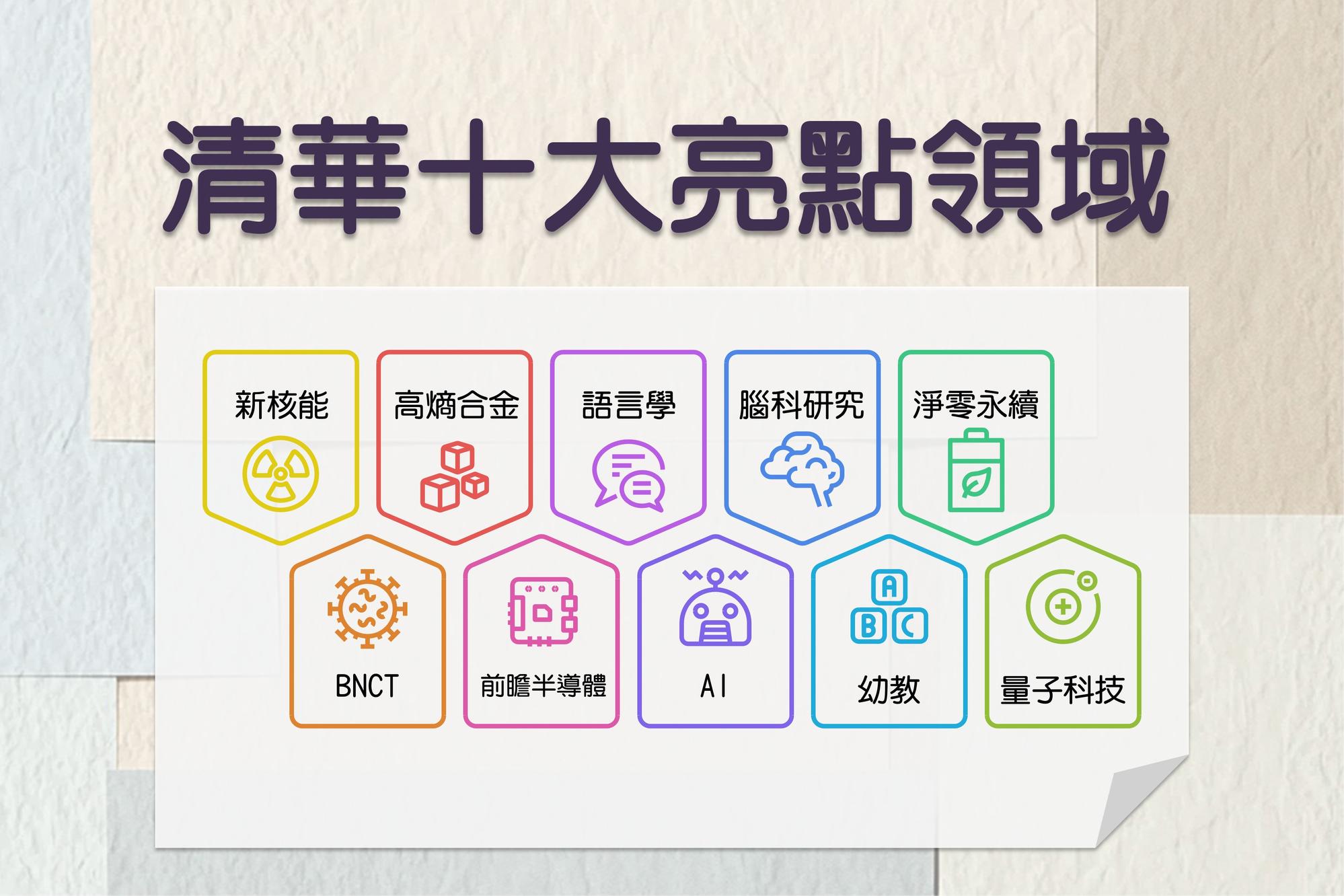
NTHU President W. John Kao (高為元) said that following last year's recommendations, NTHU reviewed its research foundations, societal needs and international impact. The university has identified 10 flagship areas—next-generation nuclear technologies, boron neutron capture therapy, high-entropy materials, advanced semiconductors, quantum technology, net-zero sustainability, early childhood education, brain science, artificial intelligence and linguistics—to serve as a framework for cross-college integration and future talent development.
Mei-Yin Chou said that this approach can help concentrate resources, enabling research areas at different scales and stages to participate together and amplify their impact.
Next-Generation Nuclear and BNCT: A Complete Technology Chain Takes Shape
Addressing energy-related challenges, NTHU's next-generation nuclear team, which has years of operational experience with the THOR pool-type reactor, has drafted plans to introduce a next-generation micro modular reactor (MMR). The project, which combines digital monitoring and simulation, is intended to support teaching, research, medical applications and power generation. Chien noted that next-generation nuclear technologies are closely tied to the energy transition and he urged NTHU to take responsibility for communicating scientific facts to the public.
With respect to medical technology, NTHU's BNCT team has built a boron neutron capture therapy facility capable of clinical treatment that has treated more than 500 patients. Working with multiple hospitals, the team is developing new boron-containing drugs and real-time detection technologies targeting liver and lung cancers, making it one of the few groups worldwide equipped with end-to-end capabilities that span “reactor, drugs and imaging.”
Quantum Technology and High-Entropy Materials: Strengthening Global Competitiveness
Materials and semiconductors have long been strengths at NTHU. The high-entropy materials research by Academia Sinica Academician Jien-Wei Yeh (葉均蔚), who ranks among the world's leaders in scholarly impact in materials science, has potential applications in defense, aerospace and the critical materials used in extreme environments. NTHU's advanced semiconductor team has also made advances in deep ultraviolet and extreme ultraviolet processes, two-dimensional materials and new photoresist materials—developments seen as important for post-Moore-era technology and industrial upgrading.
Chen compared these strengths to “key puzzle pieces,” urging NTHU to build on them so that the university can continue to play an indispensable role in critical technologies. He also called for a clearer branding strategy to associate advanced materials and manufacturing processes with NTHU.
In quantum technology, NTHU continues to advance optical and superconducting qubit technologies and it has received approval from the Ministry of Education to establish a national top-tier research center to foster Taiwan-based quantum technology startups.
From Linguistics to AI: Strengths Across Disciplines
NTHU's linguistics team has long focused its research on Austronesian languages. It ranks 71st worldwide in linguistics in the latest QS World University Rankings by Subject, underscoring NTHU's international visibility in language and cultural preservation. In artificial intelligence, NTHU is advancing multimodal large language models and robust machine learning, while also developing practical guidance—based on classroom experience—regarding AI's effects on learning and teaching. In the 2024–25 academic year, nearly 90% of NTHU graduates took at least one AI-related course.
Brain science and early childhood education were also highlighted as areas aligned with societal needs. NTHU is using multimodal sensing and AI-based analysis to study child development and it is also developing next-generation neuroimaging and microscopy to better understand how the brain works. Liang praised the inclusion of early childhood education and suggested collaborating with the Child Health Research Center at the National Health Research Institutes (NHRI) to share research findings with the Ministry of Education's K-12 Education Administration.
Across the 10 areas, Su recommended concretizing the goal of “benefiting the nation and improving people's lives” by setting trackable indicators for each area and benchmarking progress regularly against international peers.
Multi-Campus Expansion and Technology Park Planning: The Importance of Governance and Integration
Another focus of the meeting concerned NTHU's multi-campus expansion and science park plans. The Taoyuan Medical and Education R&D Park, which continues to attract investment, aims to develop a smart, green hospital that can serve as a model for build-operate-transfer (BOT) university hospital projects in Taiwan. Liang suggested forming a medical development committee that brings together deans across colleges and external leaders with medical development expertise to coordinate strategy for the College of Biomedical Sciences and the future affiliated hospital.
The Kaohsiung Campus is focusing on semiconductors and sustainability. It has completed a pilot graduate-level credit program related to semiconductors and is seeking 12-inch wafer production line equipment to link talent development with industry-academia collaboration. Starting next year, NTHU plans to enroll master's students in the College of Sustainability and apply to establish a key industry-academia innovation college. The goal is to train 2,000 graduate students within 10 years to meet the demand for talent forecasted in Kaohsiung's “Semiconductor S Corridor” and the national “Greater Southern Taiwan Plan.”
The Chunghua Campus will eventually serve as the location for the College of Semiconductor Research (CoSR). The College of Sustainability is also planning an Institute of Smart City Architecture, intended to develop in tandem with the proposed Tsing Hua Science & Technology Park. The park will focus on deep-tech areas such as semiconductors, quantum technology, energy and biomedicine. It is expected to combine space leasing, incubation and acceleration, ecosystem services and startup investment to facilitate the utilization of NTHU research results in commercial applications.
Kuo suggested providing startups with one-stop support—from financing and business planning to shared equipment—and said NTHU should better leverage its strong record of granted U.S. invention patents.
Several members stressed that multi-campus growth must be matched by stronger governance. Wu observed that NTHU's current scale is not large, but its performance stands out. If NTHU aims to expand further, she said, success will hinge on whether resources and initiatives are integrated effectively.
Chou proposed a rolling review mechanism to keep campus development aligned with the overall framework of “one NTHU.” Shyy said expansion should also take care to maintain institutional continuity and faculty succession. He recommended university-level mechanisms for cross-college coordination as well as a global talent recruitment strategy.
Liu to Step Down as Convener, Urges Continued Pursuit of Excellence
Before the meeting ended, Liu announced that he would step down as convener. He said he has served on the university's advisory committee for more than a decade, including many years in the role of convener. He expressed respect for the efforts of committee members and successive presidents, and urged NTHU to continue pursuing excellence as a research university in the face of demographic decline and resource constraints.
President Kao thanked members for their input, calling the recommendations “a mirror for NTHU” that reflects achievements while pointing to what comes next. He said NTHU will continue pursuing its mission to create distinctive value, and keep advancing interdisciplinary and diverse development so that every field, campus and member of the NTHU community can contribute to sustainable social development.
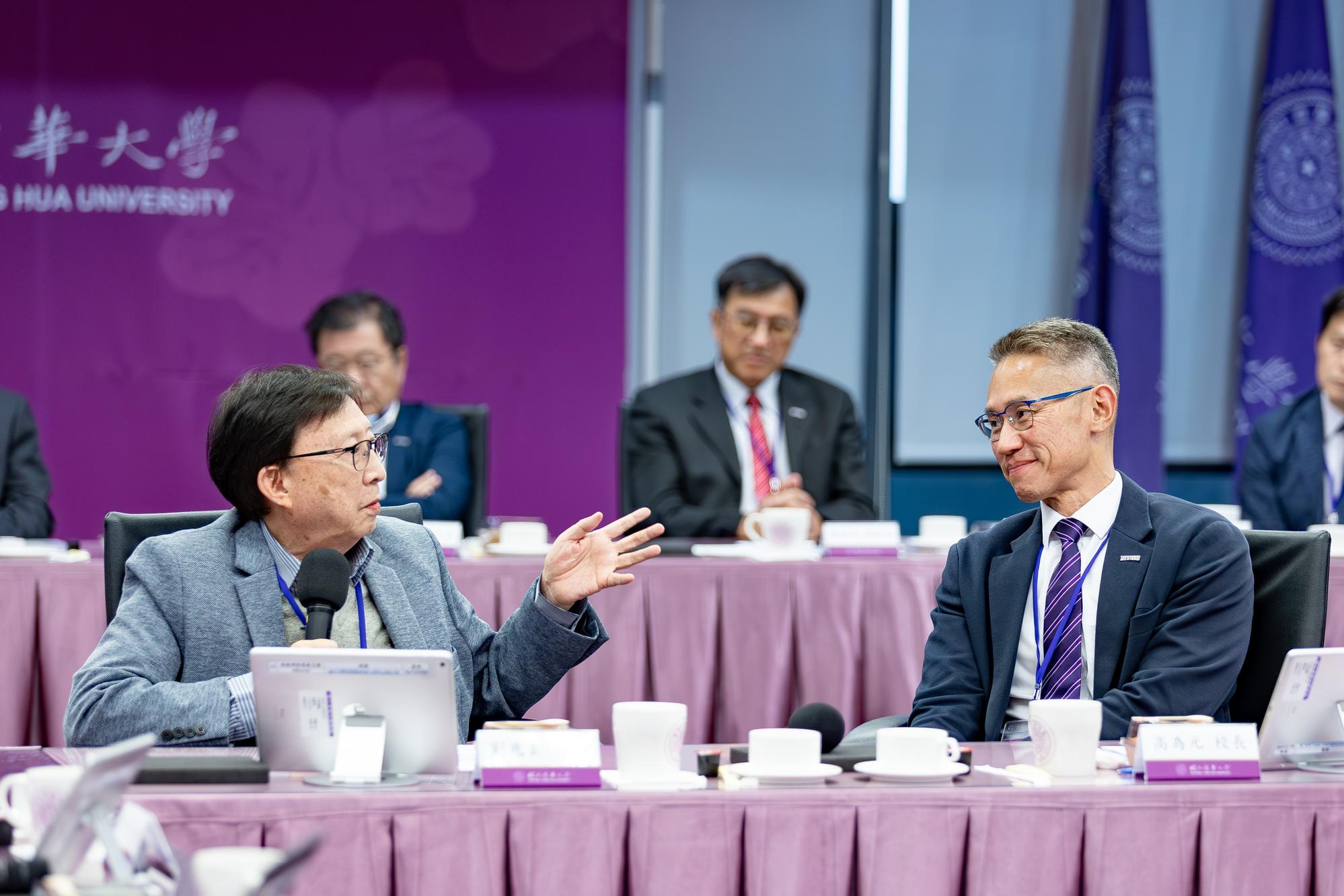
NTHU President W. John Kao (right) discusses university development with convener Chao-Shiuan Liu.
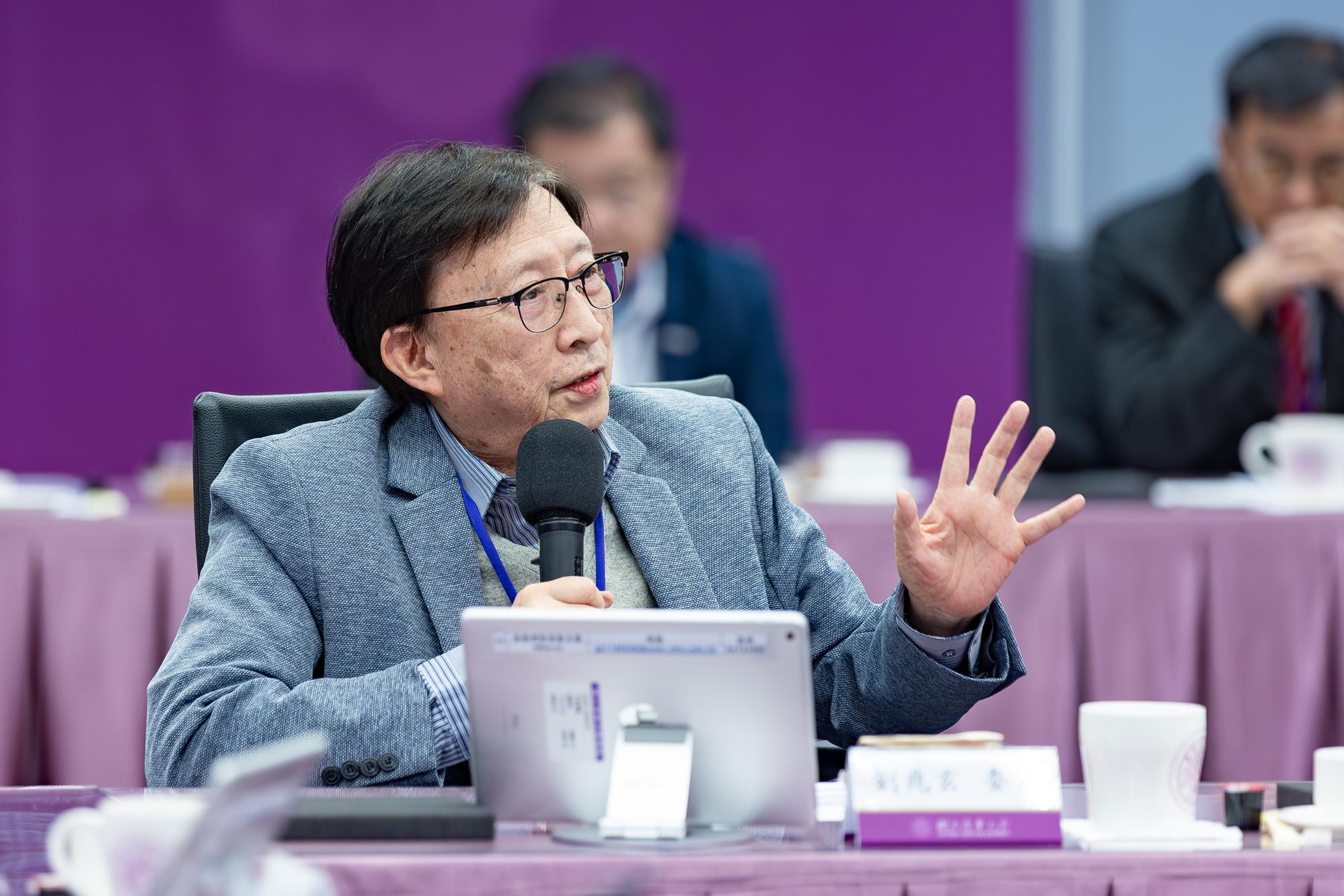
Chao-Shiuan Liu speaks at the meeting.
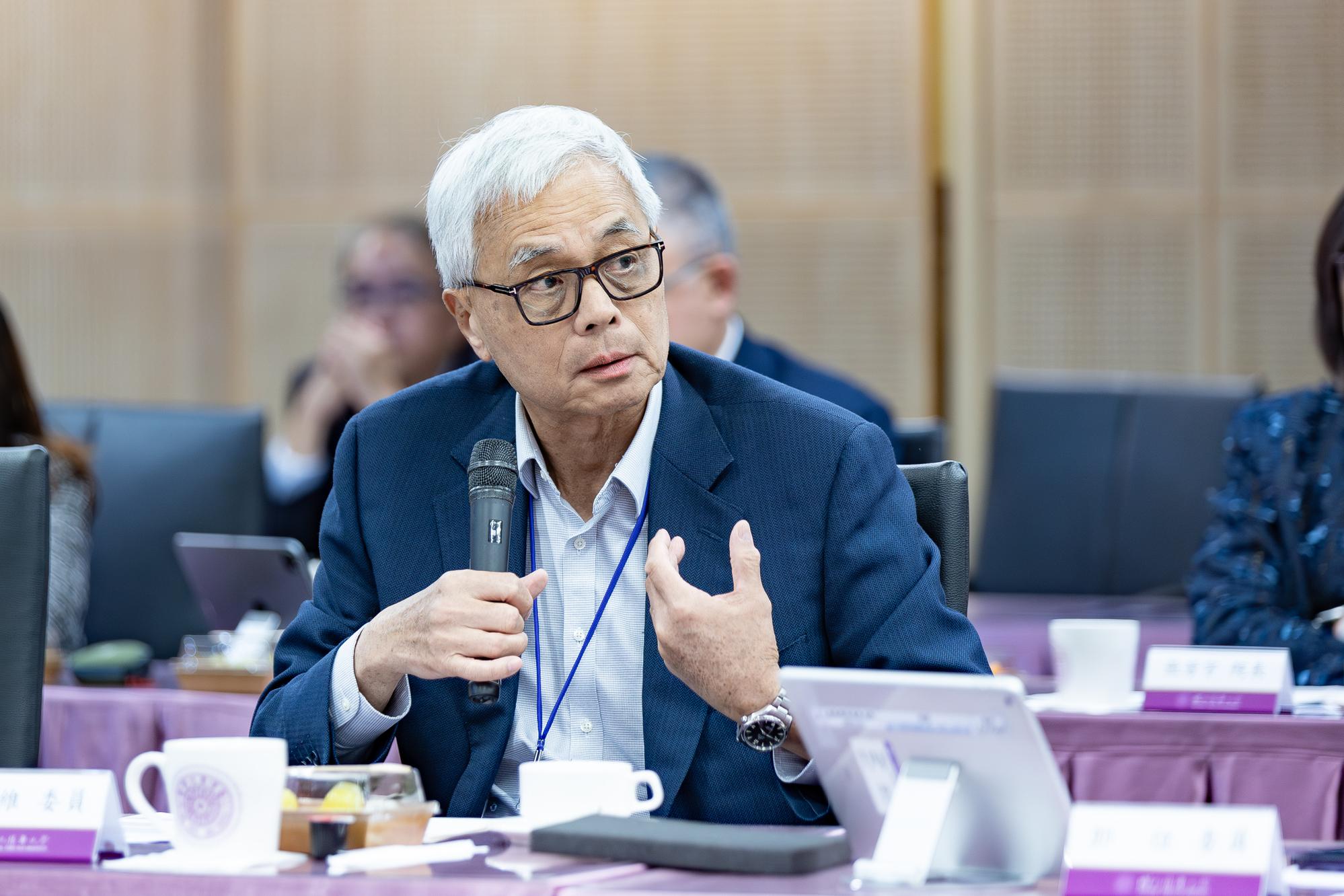
Wei Shyy speaks at the meeting.
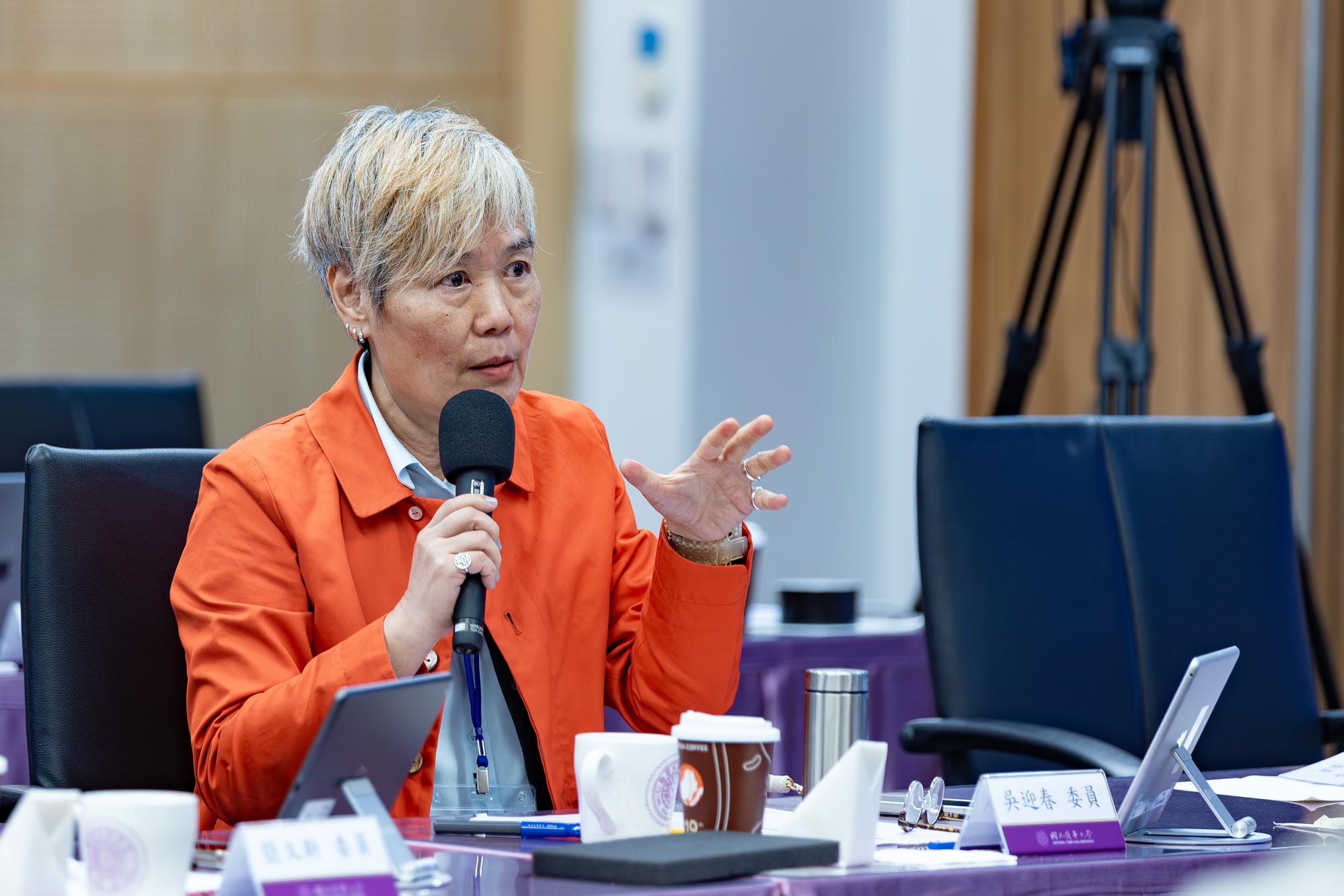
Ying-Chun Wu speaks at the meeting.
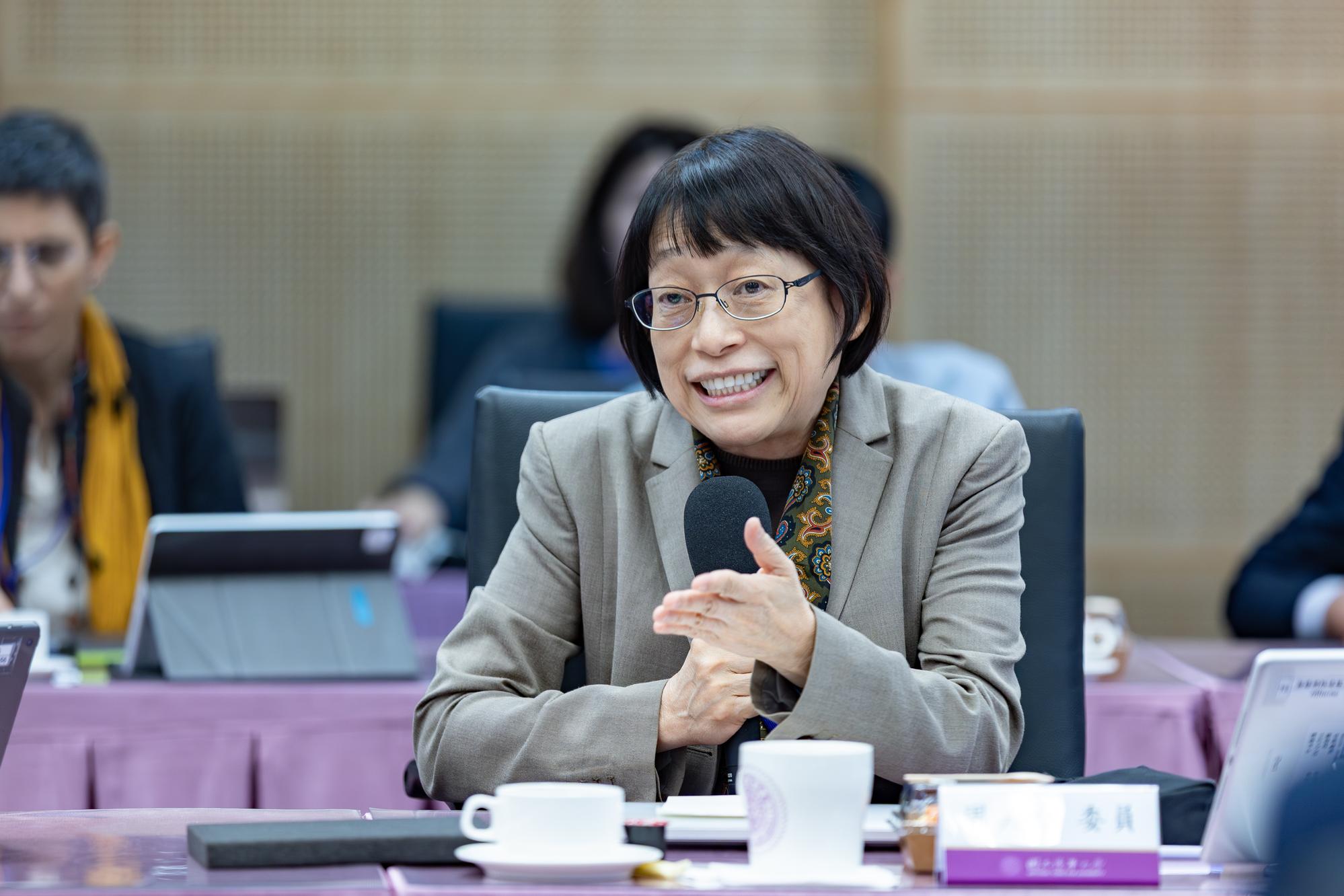
Mei-Yin Chou speaks at the meeting.
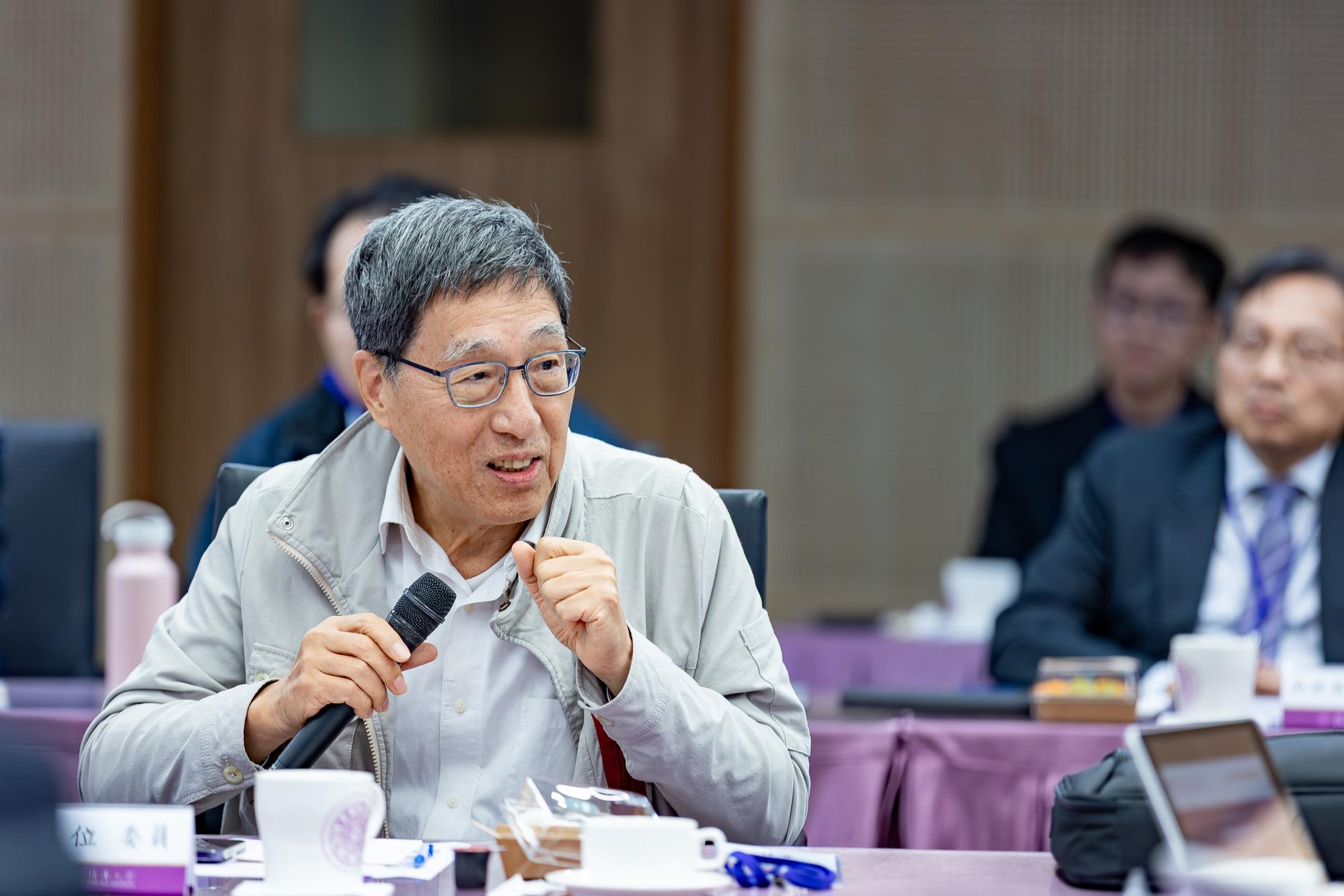
Way Kuo speaks at the meeting.
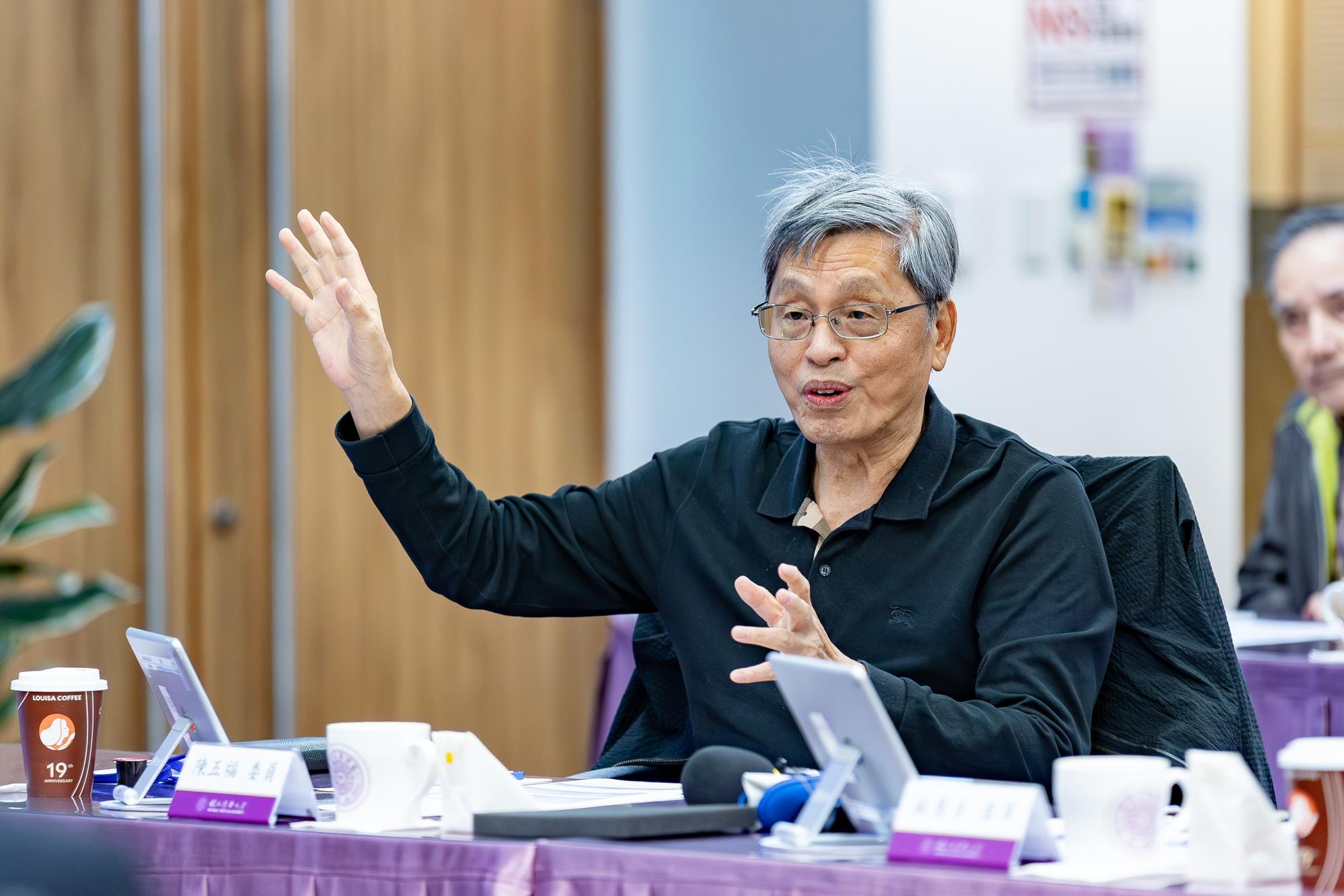
Wu-Fu Chen speaks at the meeting.
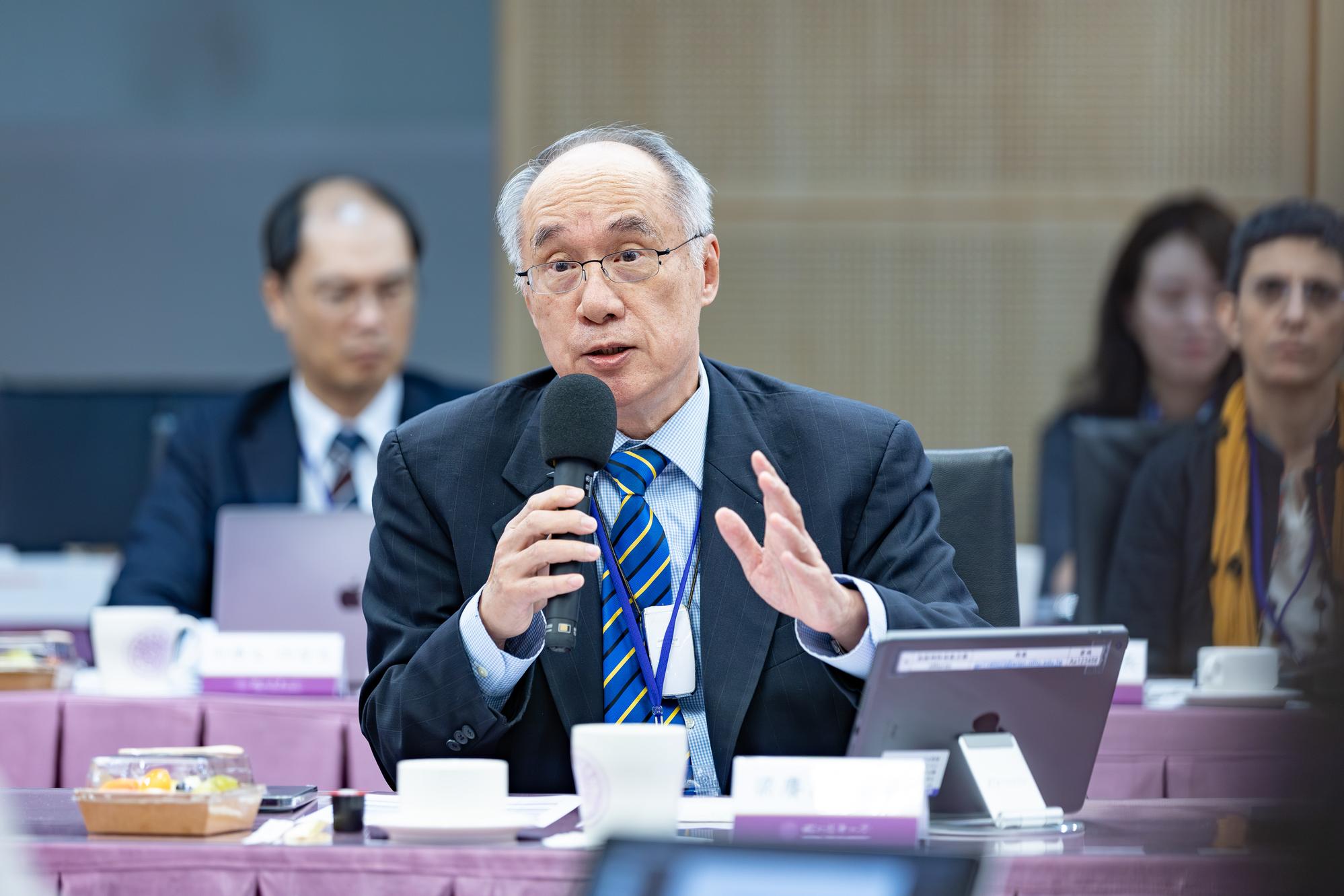
Kung-Yee Liang speaks at the meeting.
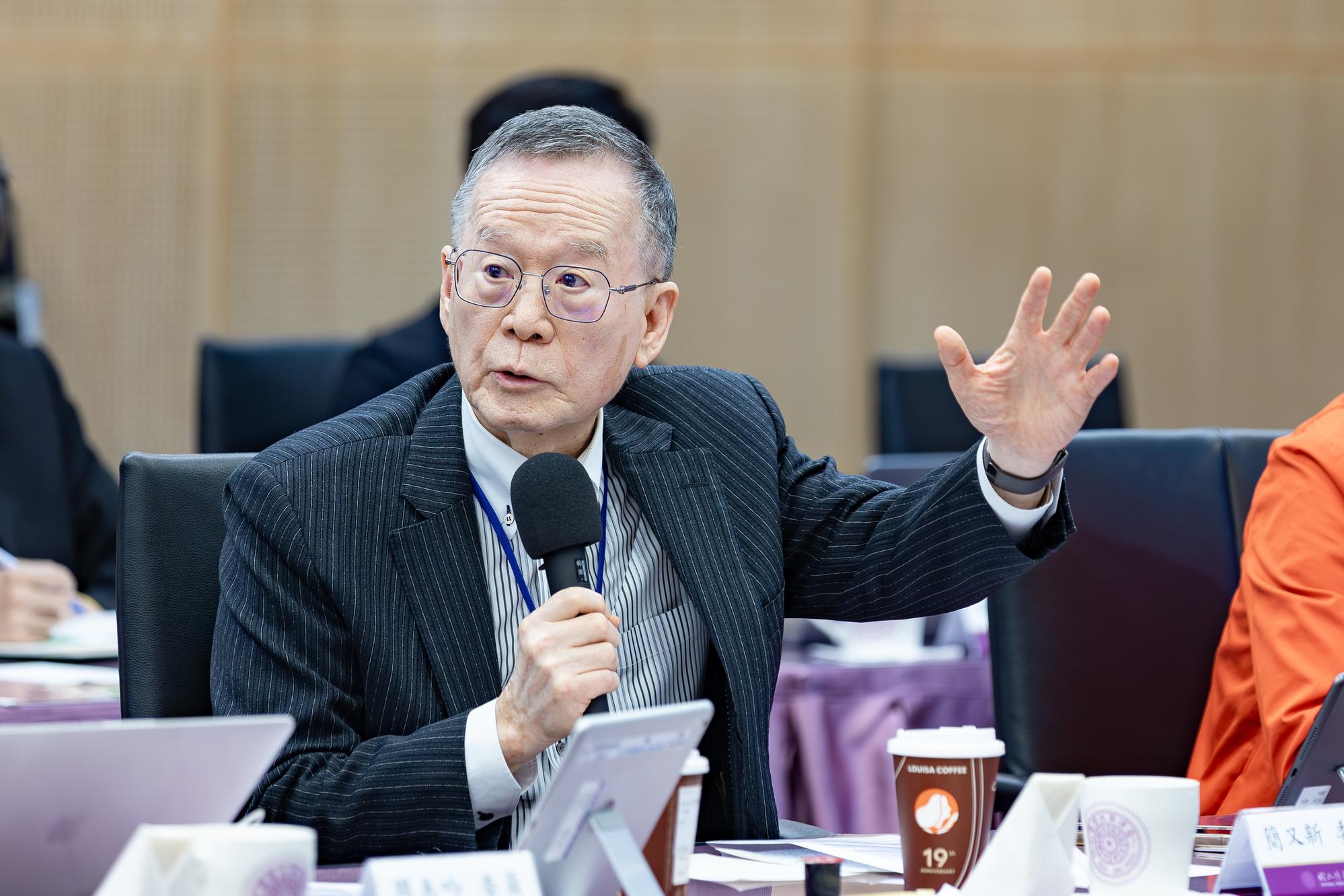
Eugene Chien speaks at the meeting.
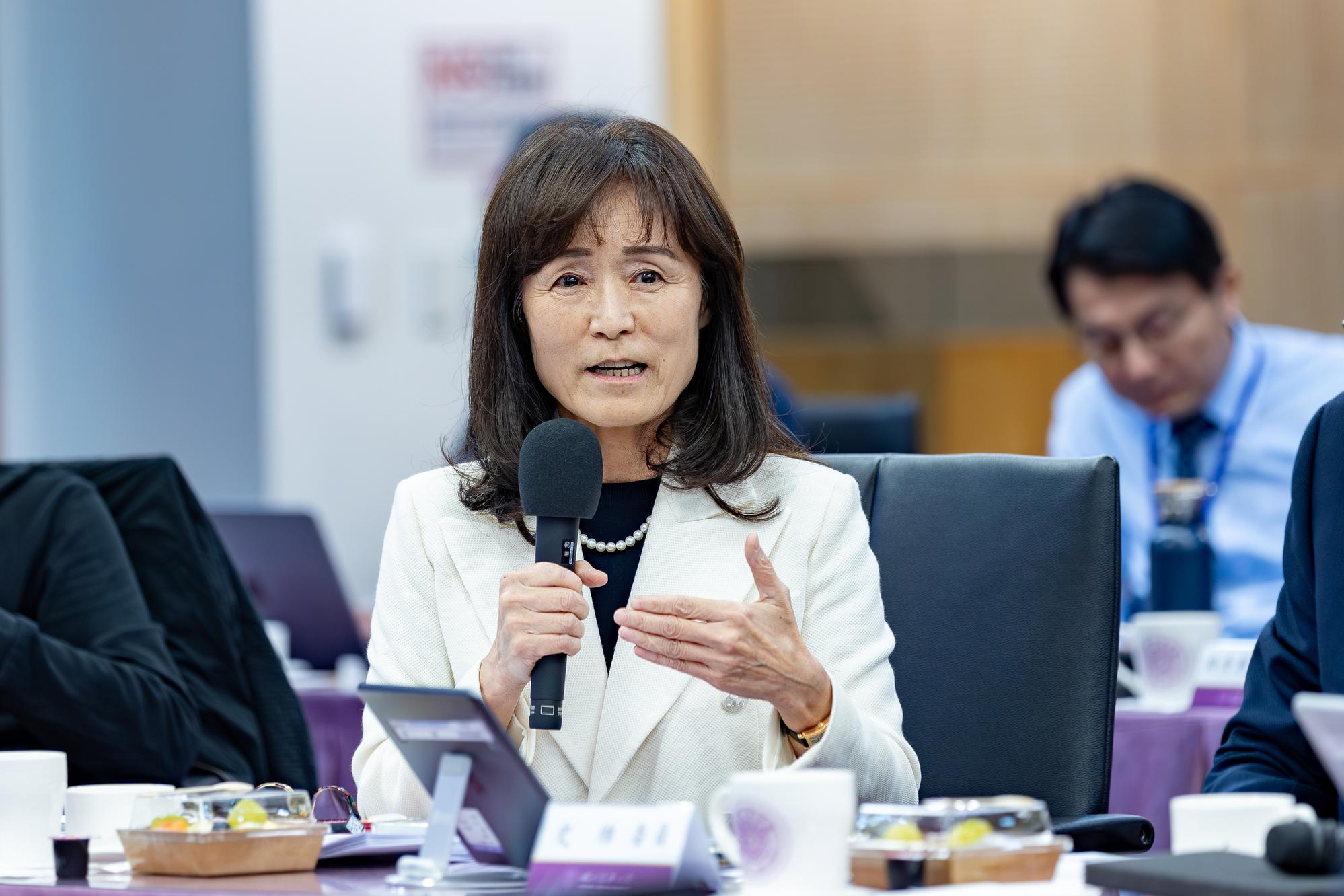
Huey-Jen Jenny Su speaks at the meeting.
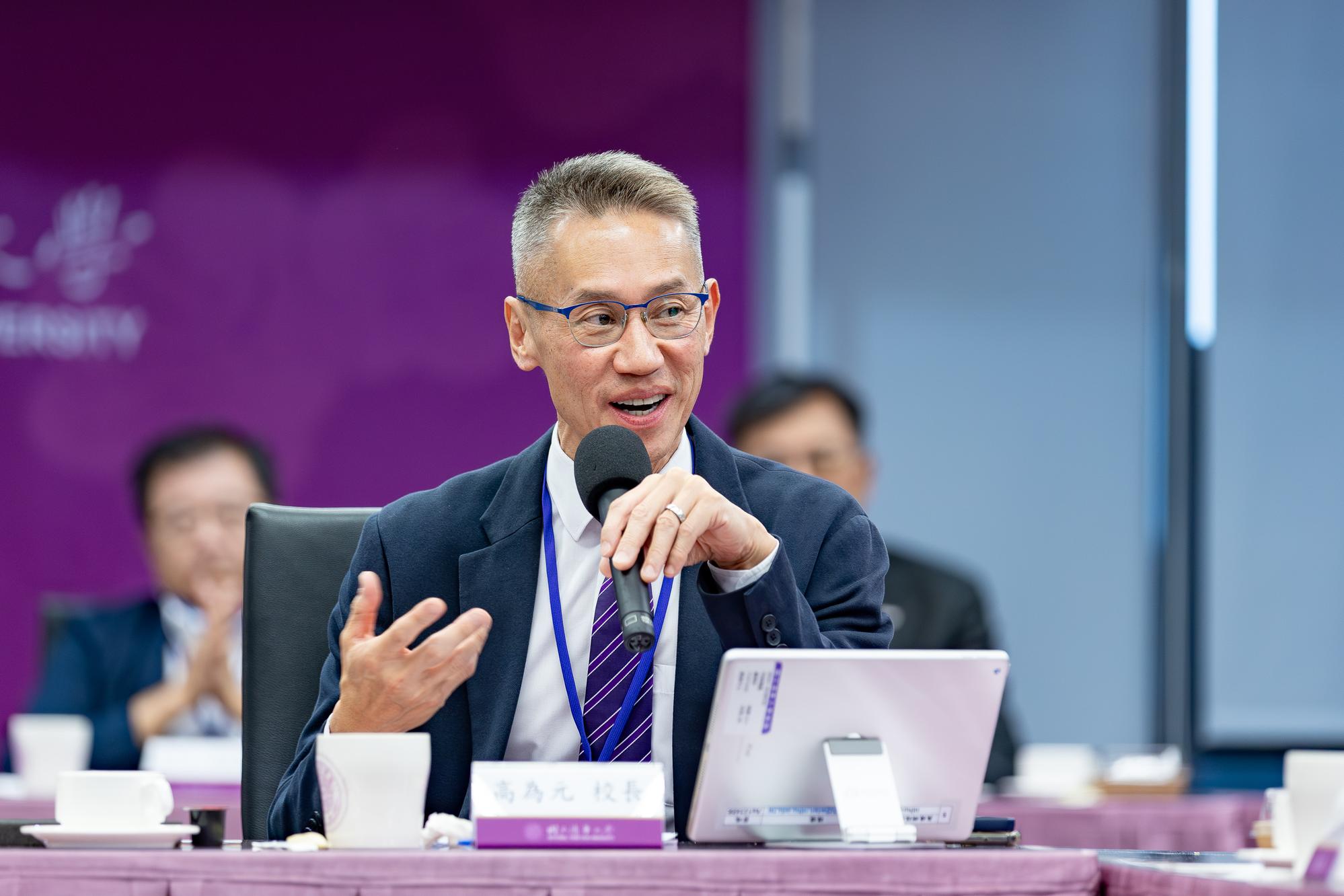
President Kao thanks committee members for their input on university development.
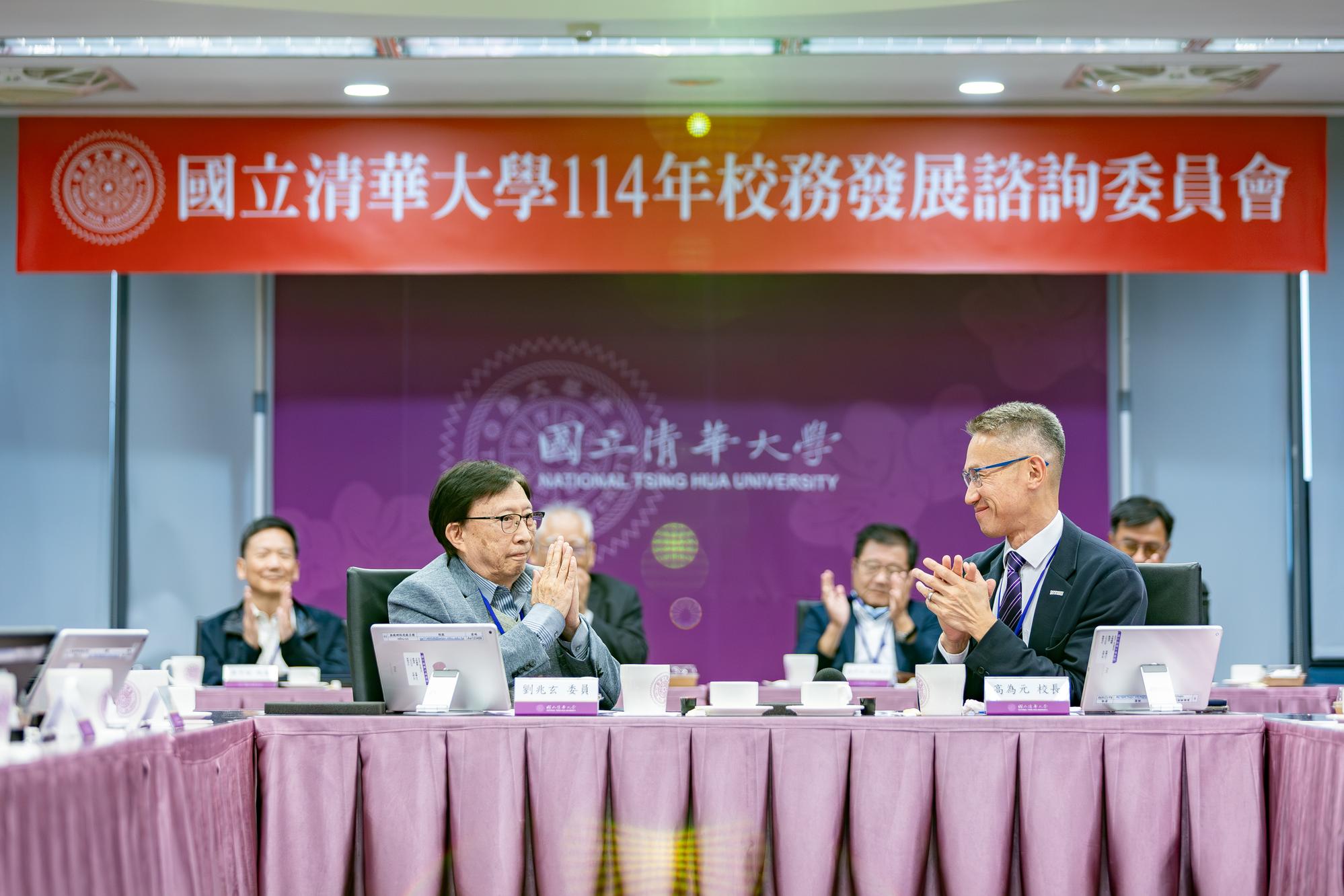
Chao-Shiuan Liu (left) announces he is stepping down as convener.