2026.06.26
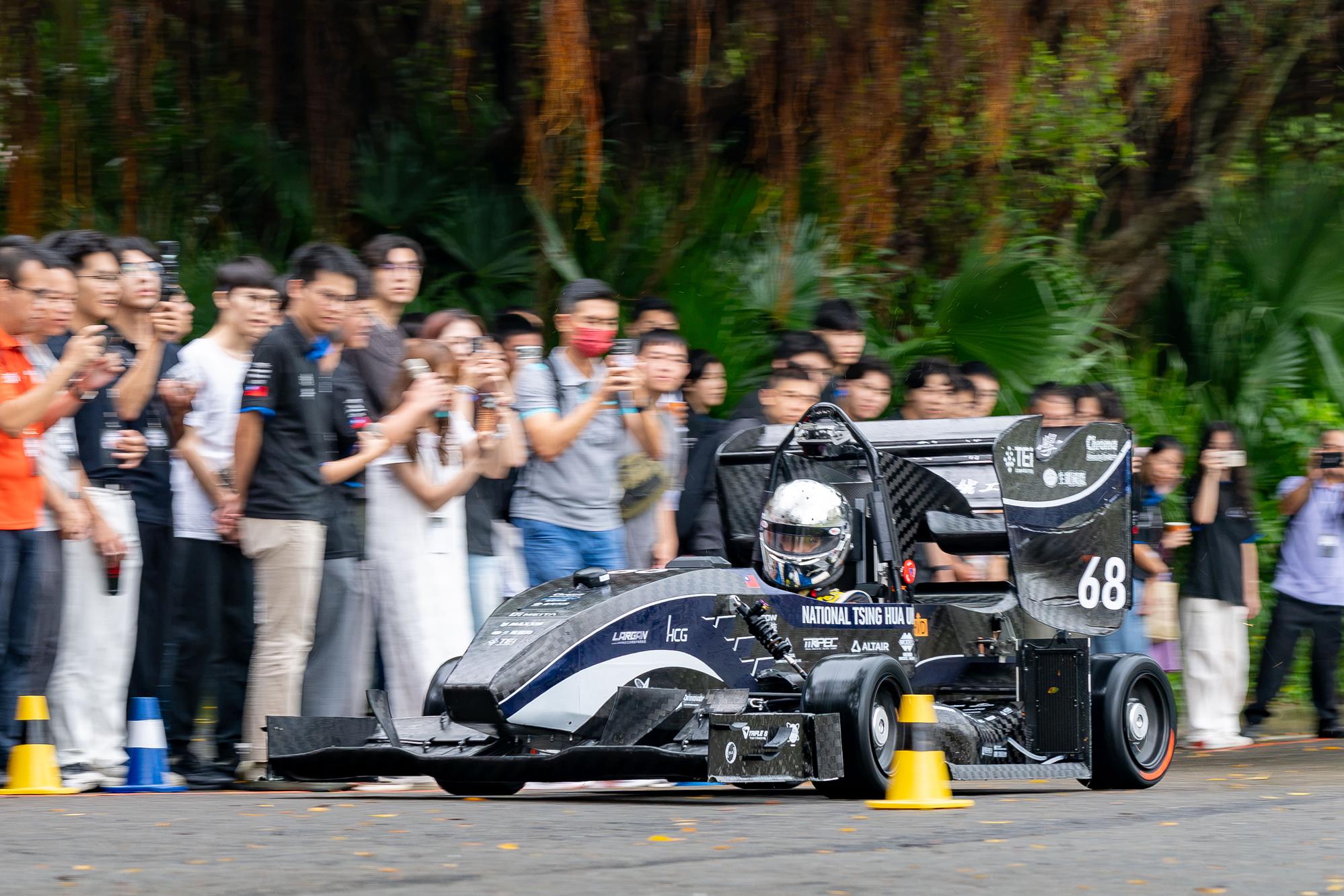
NTHU Racing Factory's 11th-generation Formula race car, TH11, makes its debut during the launch event. The new car features topology optimization analysis for the first time, reducing the chassis weight to just 24 kilograms.
National Tsing Hua University's student Formula racing team, NTHU Racing, unveiled its 11th-generation race car, TH11, on June 25. The new car features an upgraded autonomous driving system that extends object detection range from 15 meters to 25 meters—an increase of about 67% over its predecessor. It moreover incorporates topology optimization analysis for the first time in the development of its carbon-fiber monocoque and custom-made components, reducing the chassis weight to just 24 kilograms.
Last year, NTHU Racing Factory returned to Europe with its 10th-generation race car, THX, and achieved one of its strongest international performances to date. At Formula Student Czech Republic, the team placed second in the Business Plan Presentation event. At Formula Student Germany, it recorded a 4.808-second skidpad lap, finishing 12th out of 83 teams and setting a new team record in European competition. This August, the team will compete in both Formula Student Germany (FSG) and Formula Student Poland (FSP).
Team captain Yi-Hsun Liao said last year's experience in Europe reinforced a key lesson: a race car's competitiveness depends not on the performance of any single part, but on the stability and integration of the entire system. As a result, the team made reliability the core principle behind TH11's development. Rather than relying solely on experience during the design stage, the team used software simulation to validate designs before physical testing, reducing troubleshooting time. During manufacturing, the team also focused on improving process stability and cross-division integration to maximize the car's chances of completing all dynamic events successfully.
Autonomous System Sees Farther and Plans Smarter
One of TH11's major development priorities was its autonomous driving system. The team significantly upgraded the vehicle's ability to “read” the track, extending its detection range from 15 to 25 meters. It also developed a dedicated deep learning model capable of predicting the car's next dynamic response based on its current speed and steering angle, helping reduce the risk of loss of control or drifting off course.
The team compares the system to an invisible driver built into the car—one with a driver's intuitive “feel” for the road and the ability to keep the vehicle on its intended path with greater precision.
TH11 also features a self-localization system based on SLAM and a path-planning framework built around a multi-objective cost function. Rather than optimizing only for the shortest route, the new algorithm also accounts for cornering smoothness, allowing the autonomous car to generate more fluid trajectories in complex scenarios. The result is a 25% reduction in response time and a 15% increase in average speed.
Topology Optimization Cuts Chassis Weight by 15.8%
Liao explained that TH11 is the team's first car to incorporate topology optimization analysis, a design approach that uses digital modeling to simulate load paths throughout the vehicle structure. By removing excess material while preserving the portions that bear critical loads, the team reduced the chassis weight to 24 kilograms, a 15.8% reduction compared with the previous generation.
Taiwan-Made Custom Slick Tires Improve Grip and Tuning Flexibility
Another highlight of TH11 is its use of custom Formula Student tires developed in collaboration with MAXXIS Taiwan. The team noted that the market for 10-inch Formula Student slick tires has long been dominated by overseas brands. Since last year, NTHU Racing Factory has worked with MAXXIS to develop a customized tire solution, becoming one of the first student teams in Taiwan to adopt tailor-made tires.
Over the past year or so, team members have repeatedly traveled to MAXXIS testing facilities to conduct track tests and provide real-world performance data, while MAXXIS took charge of research, development and production. The new tires feature a 10-inch rim design, with an outer diameter of approximately 16 inches and a width of about 7.5 inches. The tires can be paired with lightweight chassis and suspension setups to enhance grip and handling flexibility. The team revealed that the tire is expected to be officially launched in the future and sold to international teams with similar needs.
Drivetrain and Battery Systems Upgraded for Reliability
TH11 also introduces major improvements to drivetrain and electrical system reliability. Cheng-Yan Chiang, head of the powertrain division, explained that the planetary carrier in the reduction gearbox—an internal structural component supporting the gear system—was redesigned this year with more efficient material distribution. The result was a 60% increase in stiffness and a 20% reduction in weight. The updated layout also reduces the need for specialized tools and makes maintenance more convenient, allowing the team to complete disassembly and reassembly more quickly at the track.
Vice-captain Chih-Tsen Lo said that because endurance events place especially high demands on thermal management, the team decided to replace the battery system's previous water-cooling setup with an air-cooling system. The change reduces the risk of water leakage, improves cooling stability, and enhances overall battery reliability. Vice-captain Yun-Hsi Tsai added that the team also reorganized the vehicle's internal wiring system, reducing the number of connection points and strengthening protective insulation to lower the risk of poor electrical contact and shorten troubleshooting time on site.
Driver Training Focuses on Endurance, Consistency, and Vehicle Feedback
Hsin-Hua Yang, who serves both as a driver and head of vehicle dynamics, said the team's driver training this year has focused on staying “ready to drive at any time.” In European competitions, vehicle inspections or unexpected delays often force drivers to wait for extended periods under high temperatures and dehydrating conditions. Drivers therefore must learn to manage their physical condition, hydration, and mental focus while remaining capable of delivering precise performance on demand.
Yang also plays a role in tuning the vehicle's dynamic control systems. By directly sensing road feel and changes in tire behavior during testing, Yang can provide feedback to the technical team for adjustments to torque vectoring (TV) and the traction control system (TCS), helping the car respond more accurately and consistently to driver input.
Formula Student Tests Engineering, Management and Sustainability
Formula Student is one of the world's most prominent student engineering competitions. Teams are required to design, build, test, and race their own vehicles, while also demonstrating excellence in acceleration, cornering, handling, and endurance, as well as cost control, business value, and project management.
Lo noted that the competition's static Cost and Manufacturing Event now includes carbon emissions analysis, requiring teams to track the carbon footprint of designated components from raw materials and processing to transportation. She said the event demands not only sound calculations and clear argumentation, but also the ability to integrate sustainability assessments into engineering decision-making.
NTHU Racing Factory currently has 82 members from a wide range of academic backgrounds, including power mechanical engineering, electrical engineering, computer science, industrial engineering, the Interdisciplinary Program of Engineering, the Interdisciplinary Program of Life Science, sports science, and foreign languages. The team is jointly advised by Professor Chao-An Lin of the Department of Power Mechanical Engineering and Professor Emeritus Pei-Jen Wang.
The team also expressed its gratitude for the long-term support of ARGOSY RESEARCH INC. and FITTECH CO., LTD., both founded by alumni of NTHU's Department of Power Mechanical Engineering, as well as sponsorship from MAXXIS Taiwan, SHENGLIH INTERNATIONAL CO., LTD., MEITA INDUSTRIAL CO., LTD., Chroma ATE Inc., and TEI Composites Corporation, whose support continues to help the team compete on the international stage.
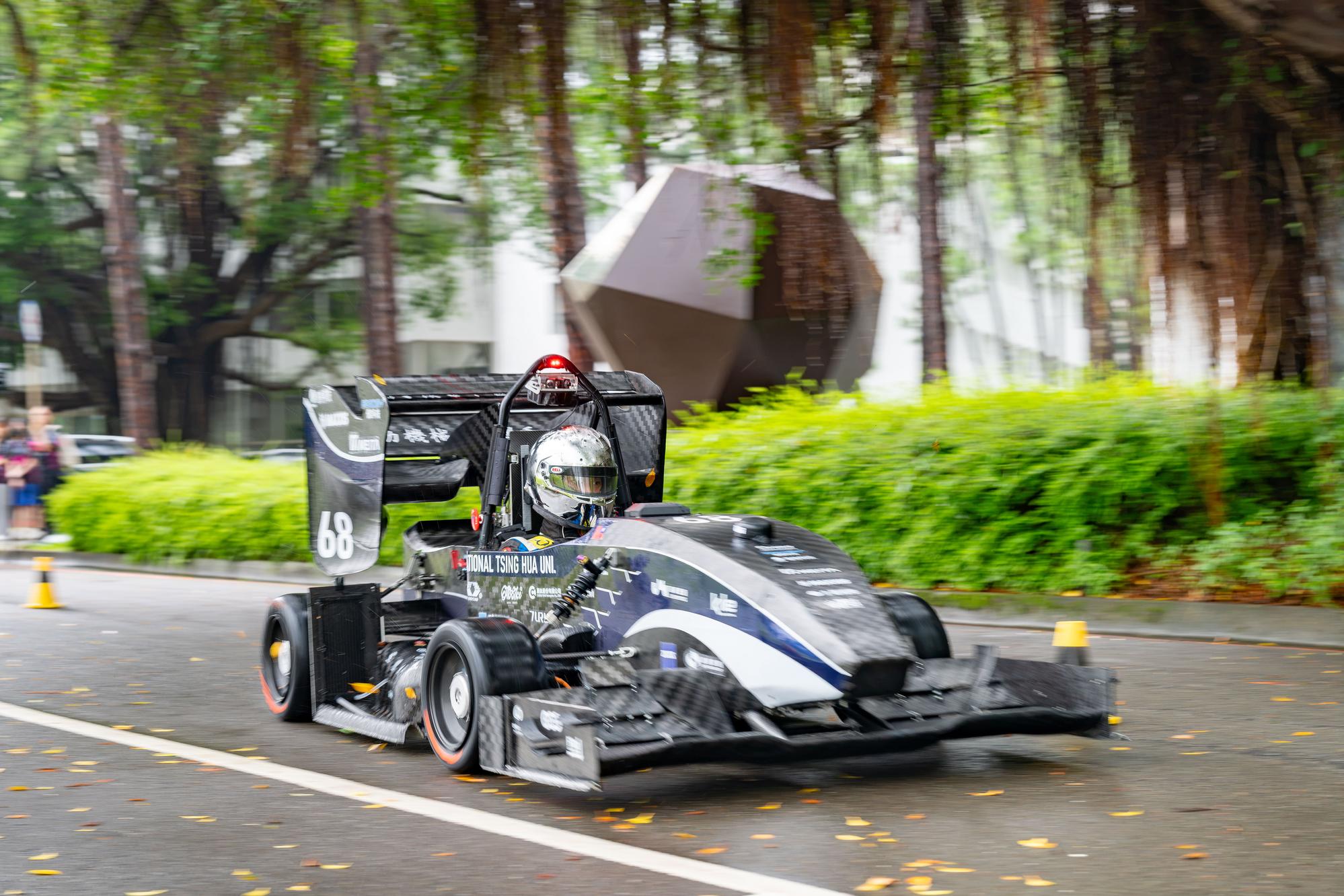
TH11 is the first NTHU Racing Factory race car to incorporate topology optimization analysis into the design of its carbon-fiber monocoque, reducing chassis weight by 15.8% compared with the previous generation.
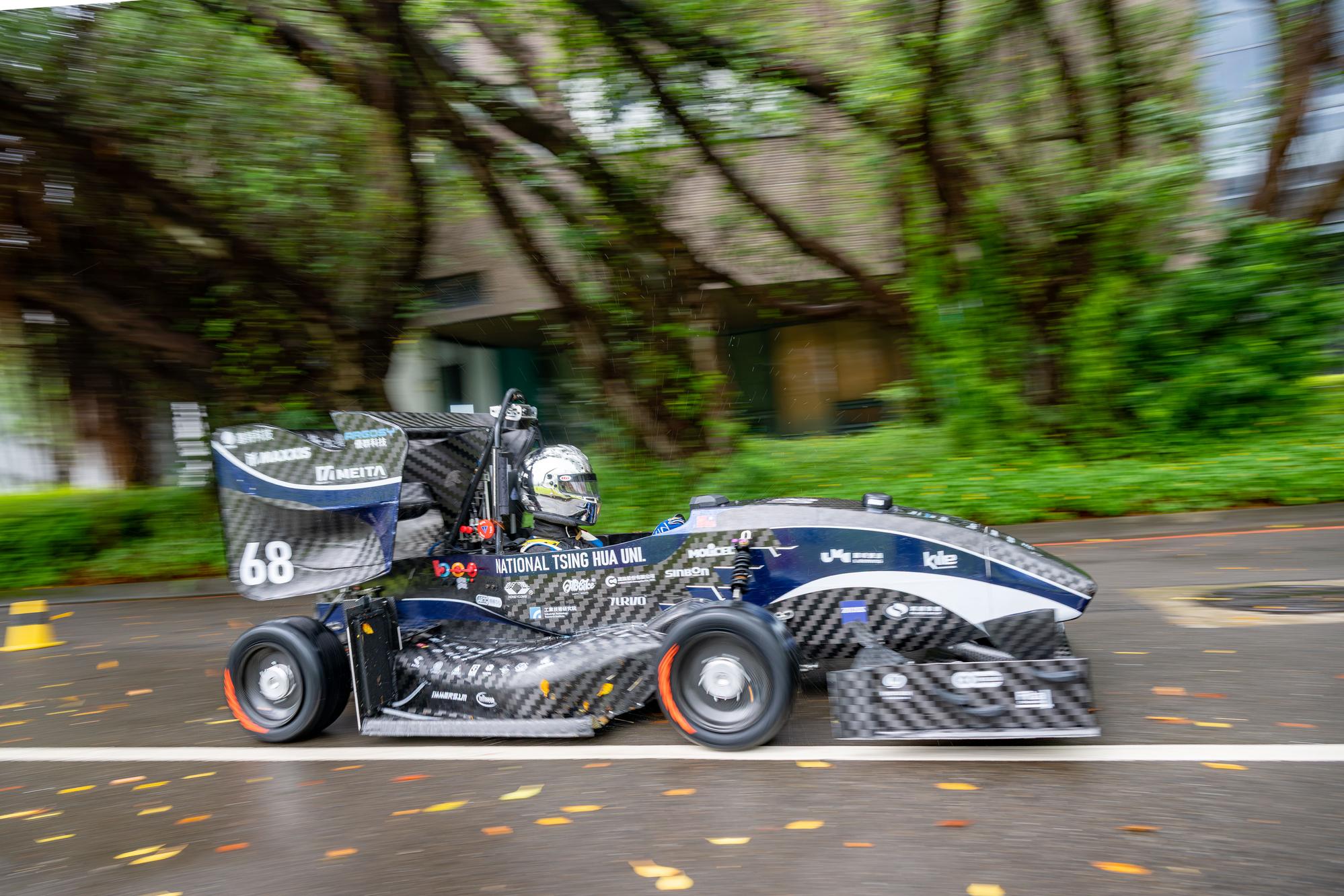
TH11 is equipped with custom Formula Student slick tires developed in collaboration with MAXXIS Taiwan. Combined with the vehicle's dynamic control system, the new tires improve grip and handling performance.
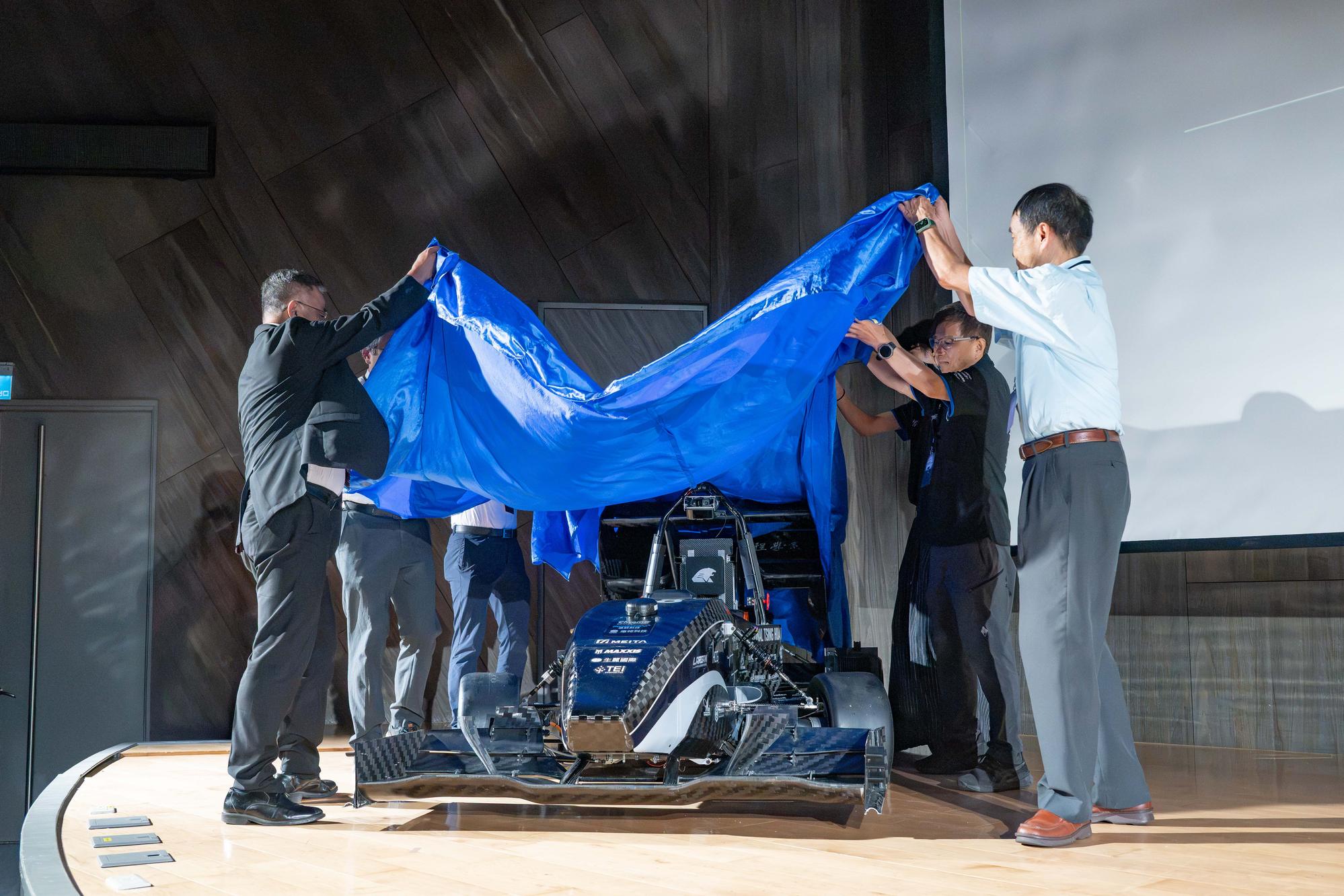
NTHU Racing Factory unveiled its 11th-generation Formula race car, TH11, on June 25. The new car features an upgraded autonomous driving system, extending its object detection range from 15 meters to 25 meters.
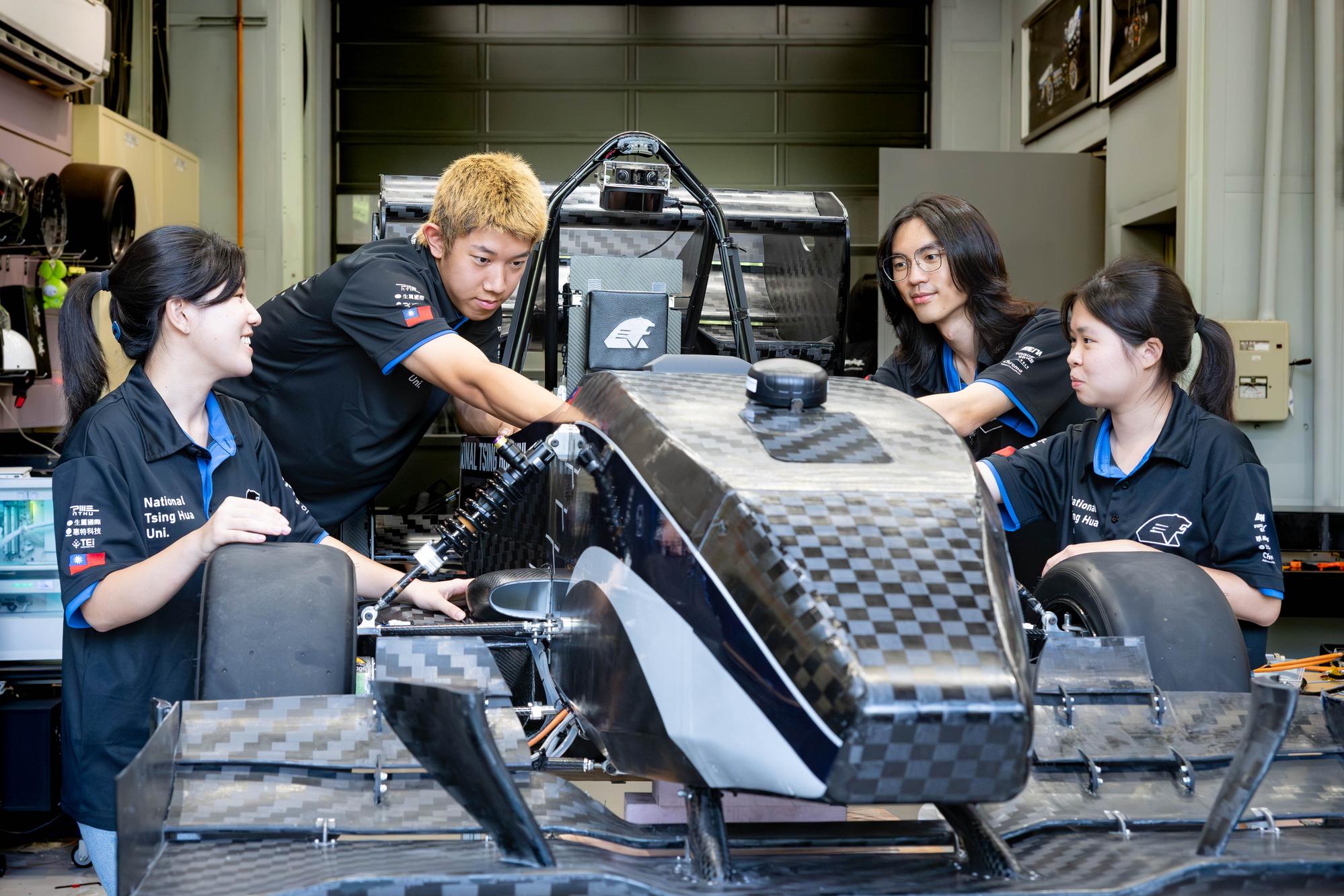
NTHU Racing Factory's 11th-generation Formula race car, TH11, features a carbon-fiber monocoque. Pictured from left are vice-captain Chih-Tsen Lo, driver and head of vehicle dynamics Hsin-Hua Yang, team captain Yi-Hsun Liao, and vice-captain Yun-Hsi Tsai.
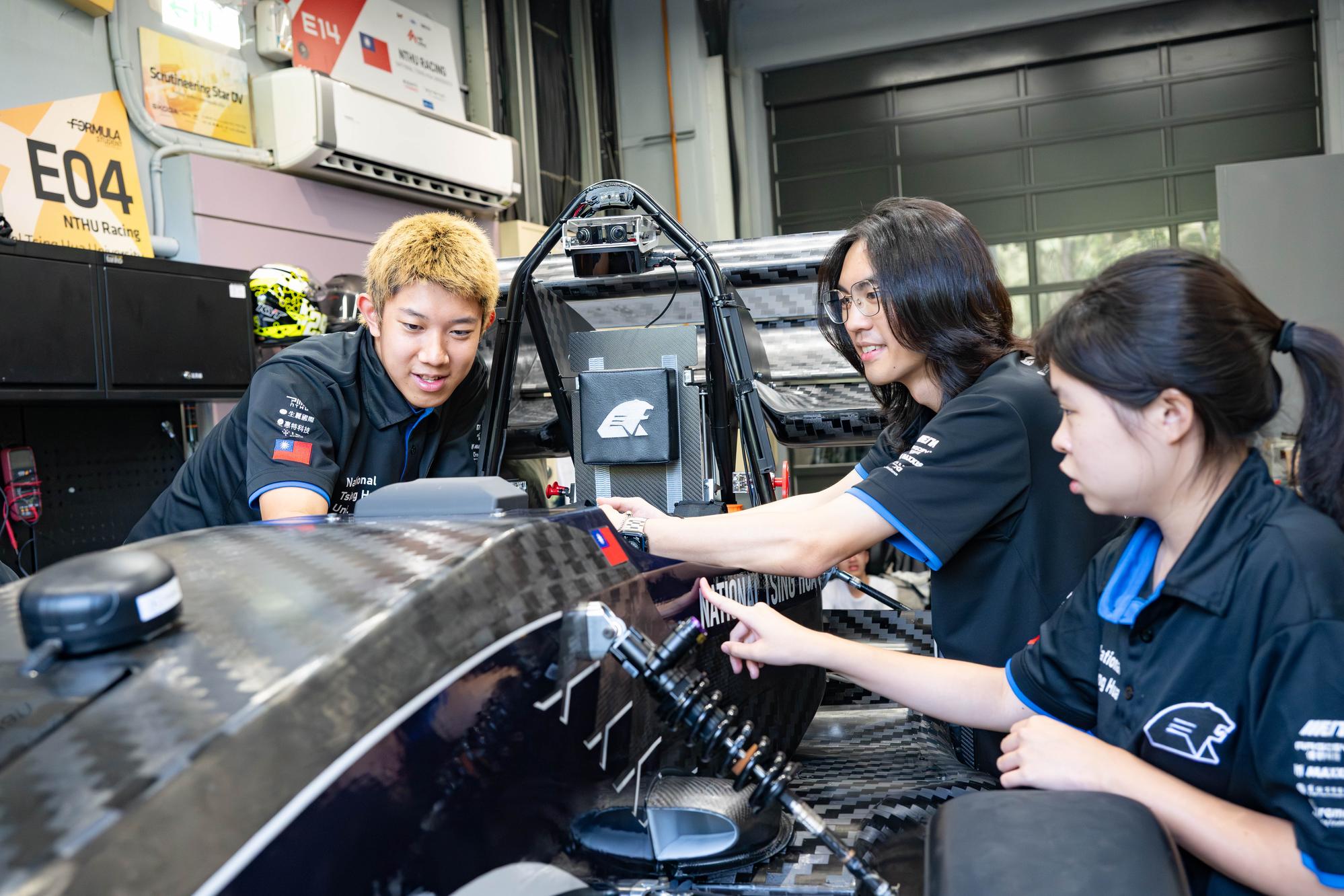
TH11 is the team's first race car to apply topology optimization analysis, enhancing component performance while reducing chassis weight.
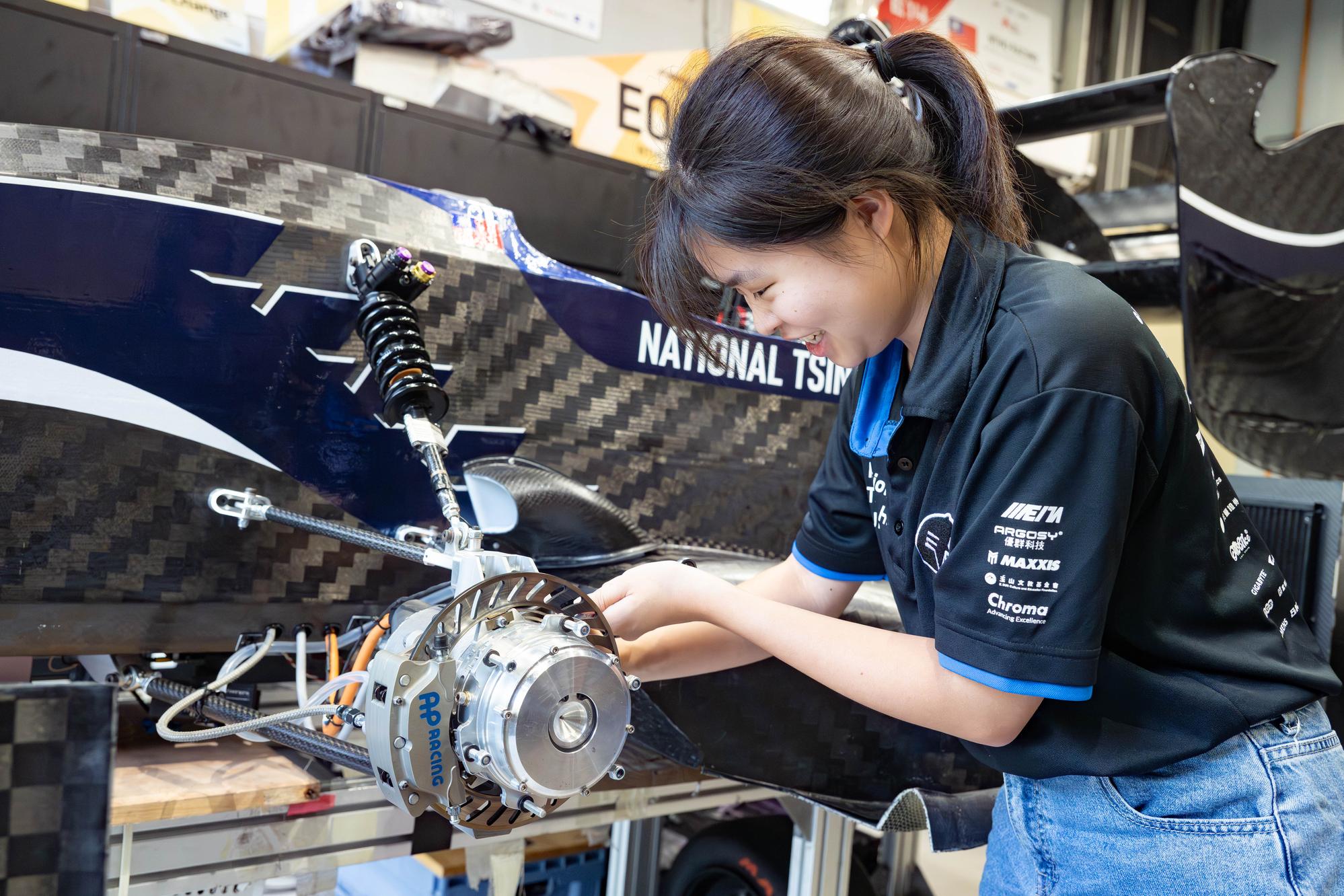
TH11 features improved manufacturing consistency and enhanced cross-team system integration, increasing the car's reliability during inspections, maintenance, and unexpected race-day situations.
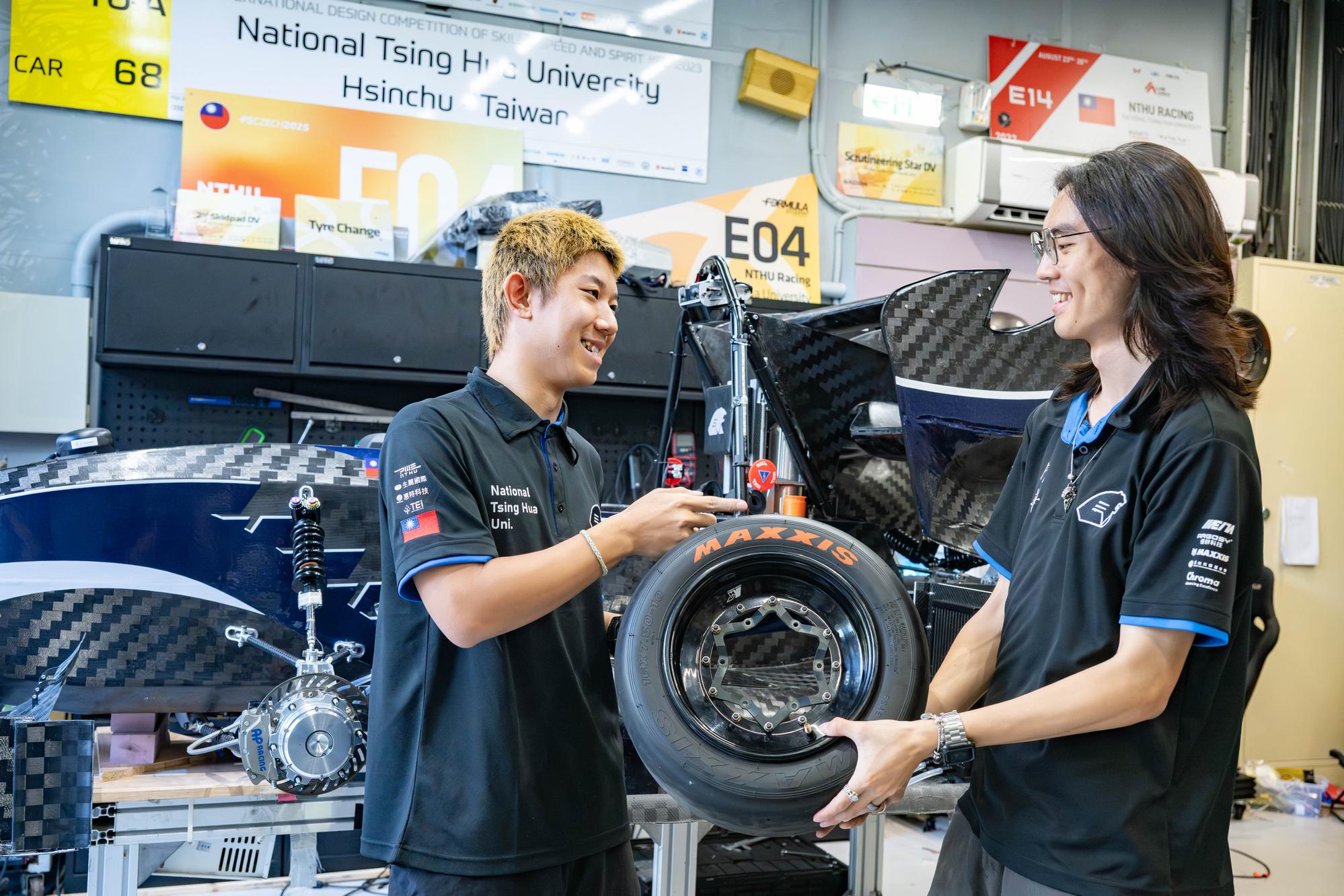
TH11 is fitted with custom 10-inch Formula Student slick tires developed in collaboration with MAXXIS Taiwan.
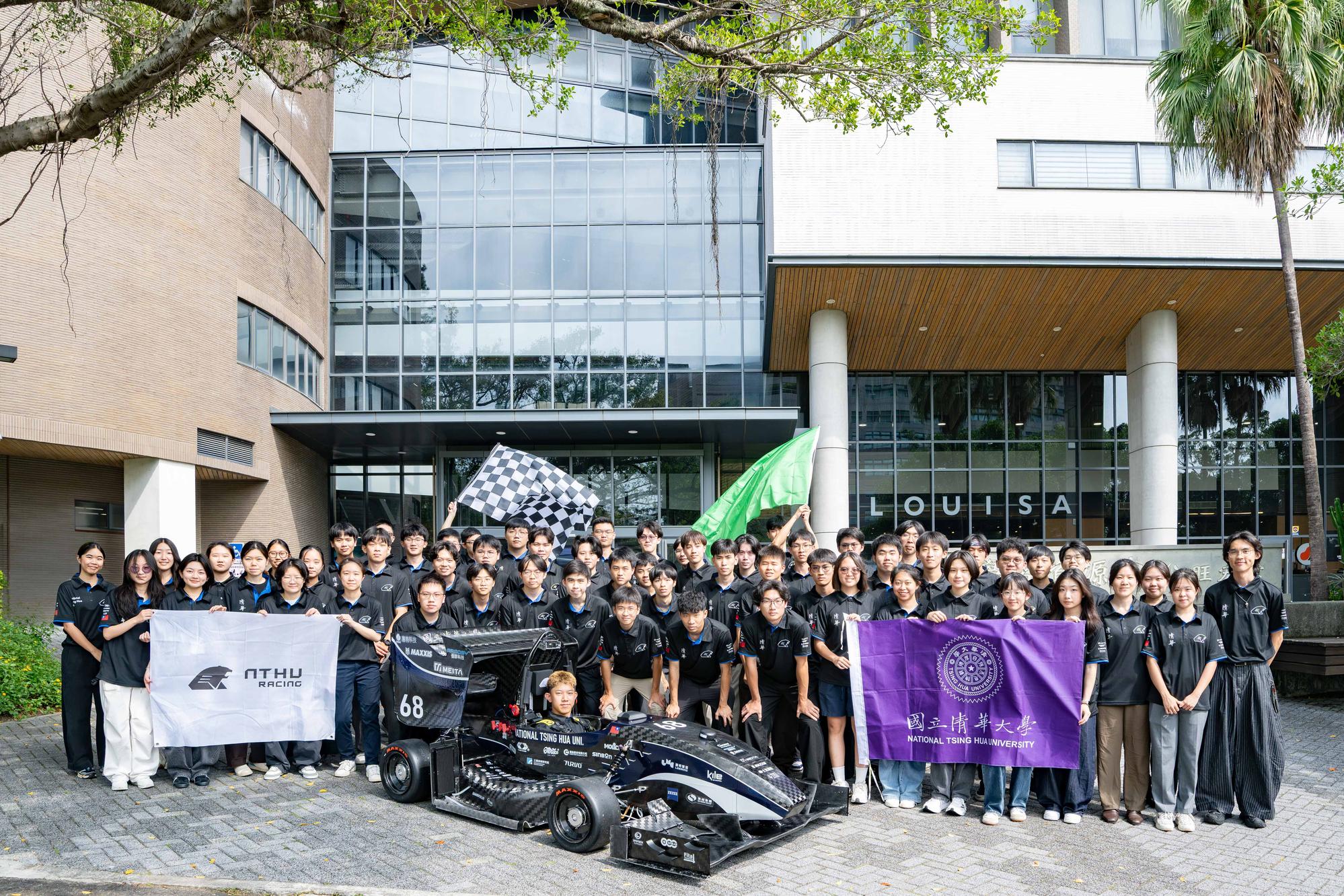
NTHU Racing Factory is comprised of 82 students from a wide range of disciplines. This August, the team will compete with TH11 at Formula Student Germany (FSG) and Formula Student Poland (FSP).
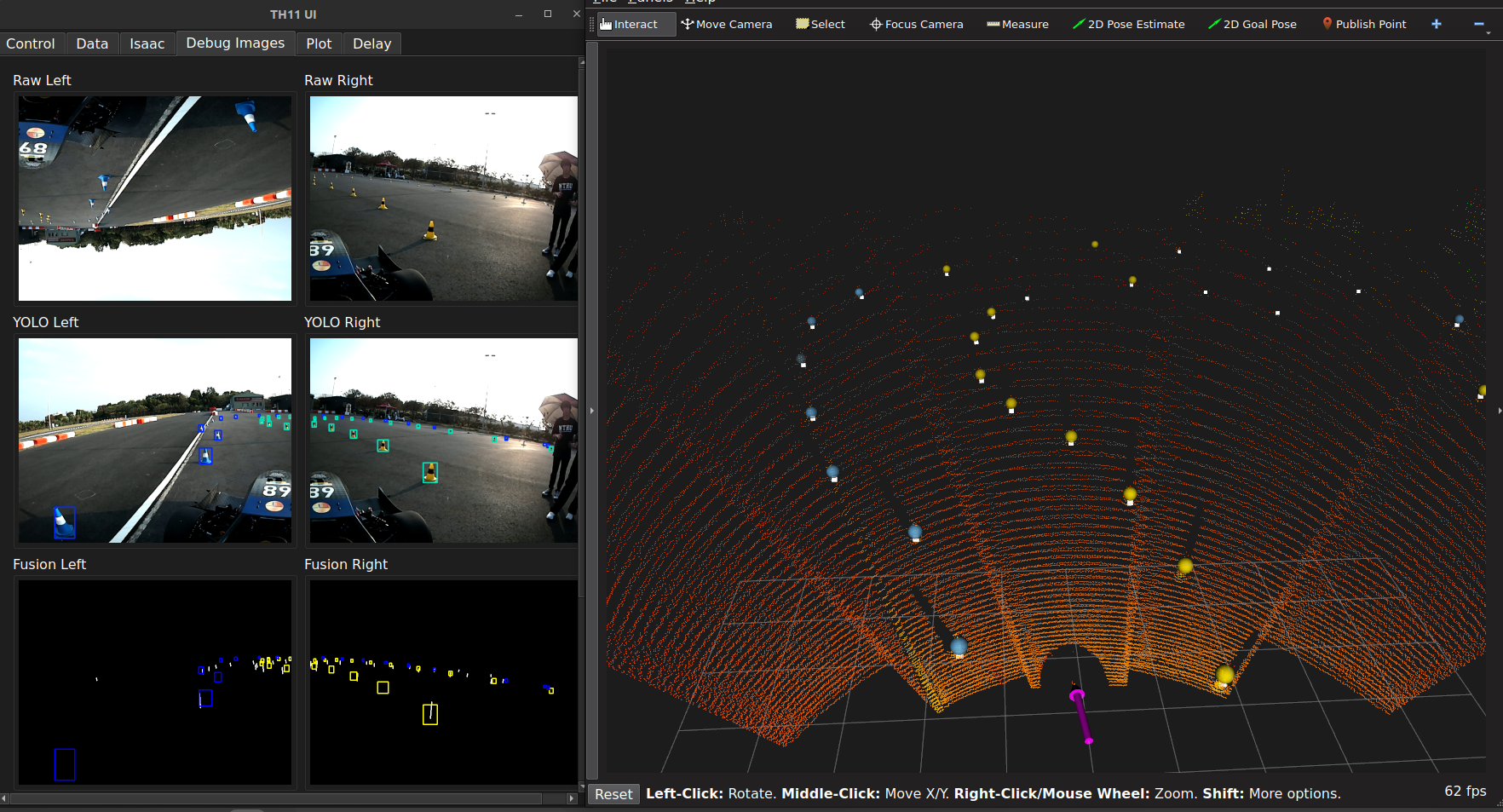
The autonomous driving interface of TH11. The new system extends the vehicle's detection range from 15 to 25 meters and integrates simultaneous localization and mapping (SLAM) with a multi-objective cost function for path planning, which significantly enhances the car's autonomous navigation capabilities.
